30 January 2020 (Human Portrait Print Competition)

This week we had the last print competition of the season. Roger Stewart, vice president of Stirling and District Camera Club, visited Musselburgh to judge our human portrait print competition. Roger specialises in wildlife and landscape photography. Click here to see his gallery.

Ten members had entered 30 prints, which was a smaller entry than usual, but this gave Roger more time to critique each print. Most of the entries this year were portraits of individuals, but there were a few group photos, and it was a group photo of three people having fun in the water which won the evening. Some of the portraits were a little too tightly cropped, and Roger recommended allowing a little more space so that a piece of hair, or the very top of a hat, is not cut off by the frame. The depth of field was an issue in some images. In a portrait the eyes must be sharp, but there were cases where the camera had focused on a nearer part of the face, leaving the eyes soft. Portraits that were not face-on posed a particular problem. If your subject is sitting at an angle you’ll need a larger depth of field to keep everything of interest in focus. The title of the print can also suggest what needed to be in focus. For example, if the title suggests the subject is writing a letter, both the eyes and writing hand need to be in focus. Likewise, a portrait entitled “Wink” leads to a dilemma over whether the open eye or the closed eye should be in focus. Settle the dilemma by keeping them both sharp. Brightening the eyes and face can also help improve a portrait. Distracting backgrounds were a common problem, and Roger suggested whether a different angle of view could have helped.

The top scorers in the human portrait print competition were (in reverse order):

  • 4th place (46 points)
    • Jennifer Davidson
    • Malcolm Roberts
    • Sean Conner
  • 3rd place (48 points)
    • Joe Fowler
  • 2nd place (49 points)
    • Steven Beard
    • John West
  • 1st place (53 points)
    • George Todd
    • Mike Clark

and the top images were:

  • Bursting With Happiness (Mike Clark) – 20 points
  • Brahman Priest  (George Todd) – 19 points
  • Fortune Teller (John West) – 19 points
  • Tanahun Priest (George Todd) – 18 points

Well done to George Todd and Mike Clark, who now need to decide how to share the trophy. Congratulations also to relative newcomer John West for a great result.
 

23 January 2020 ( Plant and Flower Photography)

This week we had the pleasure of a visit from Liz Cole, a plant and garden photographer. Liz runs a Japanese Garden Photography course at the Royal Botanical Gardens in Edinburgh. Her images are regularly used by gardening magazines, books, newspapers and horticultural labels. It had been 9 years since Liz had previously given a presentation to Musselburgh Camera Club, so this one was long overdue.

Liz began by describing the equipment she uses for plant and flower photography. She uses Fuji X-Pro 2 mirrorless camera. The advantage of a mirrorless camera is that it is small and light, doesn’t attract attention, and yet still gives good quality photos. The camera has a very quiet shutter, which helps if you are photographing plants in a Japanese temple, and a good autofocus. Two types of lens can be used for flower photography. A macro lens lets you get up close and capture small details, but a medium telephoto lens will let you capture a larger plant or flower and blur out the background. A lens which gives a good out-of-focus bokeh gives the best results.  Liz recommends photographing plants and flowers by natural light. Using a flash can upset the colour balance (which is not good if you are aiming to use your image on a plant label).  A silver reflector can be used to brighten the shadows. It is possible to attach a circular reflector to the front of your lens to help with macro shots.  Adding a UV filter can help to improve the colours in sunlight and a polarizer filter can create a richer sky background.  Liz doesn’t use any other kinds of filter for plant photography.

Liz began by showing us the images of plants and flowers in their natural setting which she uses for horticultural magazines and plant labels. There were several beautiful images of Japanese gardens, common and exotic garden plants, trees and wild flowers captured in the Aberlady nature reserve. She used a lot of upward-pointing shots of trees which kept tourists and distractions out of the shot and captured the blossom against the sky or background plants or buildings. Liz then showed us a collection of studio portraits of plants and flowers which she had captured indoors or at flower shows. Unlike the outdoor shots, these images have a plain background. Liz uses a white, an 18% grey or a black background, as appropriate for each image. During her presentation, Liz gave us some hints, tips and great ideas for improving our photography:

  • Make sure you control the exposure so that flowers with white petals are not blown out in the highlights. Always underexpose a white flower.
  • If you don’t have a silver reflector handy, you can use the silver lid from a curry carton.
  • Check your plants carefully for ugly defects, pieces of dirt or lurking insects. Also (if you are allowed to) remove bits of rubbish from the surroundings. It is much better to get the shot right in camera than to try to fix it afterwards.
  • Don’t forget that seed heads and shoots can be just as beautiful as flowers.
  • If you want to ensure you have a plain background at a flower show, take along a print of an out-of-focus image of your own lawn. This kind of background can also be used for insect shots.
  • If you are using an artificial background make sure it is far enough away that your subject doesn’t cast a shadow on it.
  • If you are composing your images for a magazine cover, leave enough space for the wording at the top.

All in all this was a fascinating and enlightening talk.


09 January 2020 (Set Subject Competition – Travel)

We opened the second half of our 2019-2020 season with the first of our 3 set subject competitions. The competition opens with the subject of “Travel”.  Jim Tod had won last year’s “Seascapes” competition and earned the right to judge this year’s competition.  Jim began the evening by drawing our attention to the commonly-accepted definition of travel photography:

Photography that may involve the documentation of an area’s landscape, people, cultures, customs and history. The Photographic Society of America defines a travel photo as an image that expresses the feeling of a time and place, portrays a land, its people, or a culture in its natural state, and has no geographical limitations.

42 images had been entered in total from locations near and far, including Scotland, England, Czech Republic, Latvia, Estonia, Iceland, Vietnam, India, China, the Galápagos islands, South Africa and New Zealand! There were landscape images showing the beauty of these locations, portraits of people going about their business, shots of interesting things and photographs of various forms of transport. The best images were the ones which combined these aspects, showing people in the context of their culture or landscapes connected with iconic local landmarks. The transport images had more impact if they showed people using the transport and included a clue to the destination in the frame (for example an image of a ferryboat approaching a jetty had more impact than a shot of a boat isolated in the middle of a lake). Blown highlights were a common fault. Many shots had been taken in bright sunlight and the use of a polarizer filter and better control of the exposure would have helped those shots.  Jim explained how some of the shots could be improved by a better viewpoint or better camera angle. The adventures of Sven Martin Bullwinkle (a series of images showing a cuddly toy journeying through Scotland) raised some laughs with the audience!

The top-scoring images were

  • A Long Way from London (Malcolm Roberts) – 20 points
  • Lake Cruiser (Mike Clark) – 20 points
  • No Room For A Passenger (George Todd) – 19 points
  • River Crossing (George Todd) – 19 points
  • Morning Commute (Joe Fowler) – 18 points
  • Mainline Steam (Mike Clark) – 18 points
  • Line (Kevin Johnston) – 18 points
  • The Beagle At Dawn (Anne Yeomans) – 18 points

The deciding factor in this competition was consistency,  and the top places went to members who had consistently good scores across all three images. The highest scorers were:

  • 5th place (47 points)
    • Anne Yeomans
  • 4th = place (49 points)
    • Joe Fowler
    • Lorraine Roberts
    • Gordon Davidson
  • 3rd place (50 points)
    • Malcolm Roberts
  • 2nd place (51 points)
    • Mike Clark
  • 1st place (55 points)
    • George Todd

Thank you very much to Jim Tod for judging this competition over his Christmas holiday. Congratulations to George Todd, who wins the right to judge next year’s competition.

This is the first in a 3-part competition, with George, Mike and Malcolm now standing at the top of the league table. The next two parts will be the “Wildlife” competition (hand-in date 23rd January 2020) and the “Old Faces” competition (hand-in date 5th March 2020). If your images didn’t do well in this competition don’t despair.  The final result depends on the total score from your best 2 competitions, so there is still everything to play for.

07 December 2019 (Black and White Print Competition)

This week, Neil Scott visited the club to judge our black and white print competition. Neil is a long-standing member of Edinburgh Photographic Society, and in 2016 had been listed as the 4th best monochrome photographer in the world by the Photographic Society of America. Neil began the evening by showing us some of his work and explaining what makes a good black and white image. The key points were:

  • A good black and white image is not a good colour image with the colour removed. When he judges an image, Neil asks himself if the photographer had a black and white image in mind when the shot was taken.
  • A black and white image relies purely on light, shade and texture. Plain backgrounds help the subject stand out. Neil prefers a strongly-contrasting, white or black background. If a subject doesn’t have a plain background (e.g. in street photography), darkening the edges can help draw your eye back into the centre.
  • Most good black and white images contain black, white and shades of grey in between. Most landscape, still life and portrait images would benefit from an increase in contrast to ensure the full range of shades is included. There are some exceptions. High key portraits of women or babies look more delicate when fewer shades of black are included.
  • Neil spends a great deal of time dodging and burning his black and white images, to ensure that the shadow and highlight areas retain their details.

There were 45 prints entered by 15 members, and Neil appraised each image in turn and explained his scoring system. A score of 14-15 meant a print needed some improvement. An average print would score 15-16, a good print 16-17 and a very good print 18. Scores of 19 and 20 were given to the top images in the competition. Some prints looked a bit flat and Neil recommended increasing their contrast to cover a greater range of blacks and whites. Some prints needed their shadows brightened to include more detail. There were also some subjects that were too tight in the frame (touching the edges) and could have been improved by giving them more space. As expected, some otherwise superb prints lost marks because they looked like good colour images with the colour removed. When the scores were added up the competition was very close, with the top places all decided by a single point! The top scorers in the black and white print competition were (in reverse order):

  • 5th place (50 points)
    • Steven Beard
  • 4th place (51 points)
    • Jennifer Davidson
    • Anne Yeomans
  • 3rd place (52 points)
    • George Todd
  • 2nd place (53 points)
    • Joe Fowler
  • 1st place (54 points)
    • Mike Clark

Well done to Mike Clark, whose top image “May Contain Nuts” was backed up by two 17-point images. The top images were:

  • The Dandy (Joe Fowler) – 20 points
  • May Contain Nuts (Mike Clark) – 20 points
  • Flightless Cormorant With Octopus  (Anne Yeomans) – 19 points
  • Eyeing Up The Opposition (Jennifer Davidson) – 18 points
  • Taj Mahal “Before The Crowds” (George Todd) – 18 points


21 November 2019 (4-Way Inter-Club Competition)

This week we had the pleasure of welcoming Kirkcaldy Photographic Society, Edinburgh Photographic Society and Stirling And District Camera Club to Musselburgh for the annual 4-way inter-club competition. Kirkcaldy had won the 2018 competition and were keen to retain their title. As usual, each club entered 15 digital projected images each, making a total of 60 images on the night. Images were judged by Stewart Dodd of Dundee Photographic Society. We are really grateful to Stewart for coming all the way to Musselburgh and judging in the midst of a cold.

This year was a particularly strong competition. We were entertained with awesome landscape images, extremely well-captured wildlife shots, stunning portraits and carefully crafted art shots. There were no fewer than eleven 20-point images and ten 19-point images scattered across all four clubs, meaning a significant proportion of the evening was spent clapping and admiring the achievement of the photographers gathered. There were some images included which had recently won SPF awards.

By the halfway point of the competition Musselburgh was leading Kirkcaldy by just one point, with Stirling and Edinburgh hot on their heals. We had a lovely interval with tea, home-made cakes and biscuits. Then in the second half came a festival of 20-point images with the final scores ending up

  • Musselburgh Camera Club – 278 points
  • Kirkcaldy Photographic Society – 275 points
  • Stirling and District Camera Club – 265 points
  • Edinburgh Photographic Society – 265 points

It is a huge achievement for the club to win against such strong competition. Well done to all the club members whose images helped us secure this result.

Normally at this point I would point out the top images entered by Musselburgh, but there were so many good images presented this year, I think all the clubs deserve credit. Here are all the top images entered:

  • Musselburgh Camera Club
    • Mating Orange Tip Butterflies – 20 points
    • Taransay – 20 points
    • Pelican Reflection – 20 points
    • Magnificent Hummingbird – 20 points
    • Razorbill – 19 points
    • Church Of The Santissimo Redentore – 19 points
    • Steep Ascent – 19 points
    • Loch Ard Boat – 19 points
    • Lava Heron Fishing – 19 points
  • Kirkcaldy Photographic Society
    • Painted Lady – 20 points
    • Rattray  Lighthouse – 20 points
    • The Potter’s Son – 20 points
    • Kilchurn Castle, Loch Awe – 19 points
    • Little Owl – 19 points
    • On a Snowy Day – 19 points
  • Stirling and District Camera Club
    • Male Kingfisher With Catch – 20 points
    • None To Share – 20 points
    • Rum – 19 points
  • Edinburgh Photographic Society
    • Beak to Beak – 20 points
    • Parallel Lines – 20 points
    • Rail Street Offering Hanoi – 19 points

Thank you to all the club members who travelled from far and wide to attend. We’ll see you again next year.

November 14 (Members Evening)

This week we had the first Members Evening of the season, where club members present their work and talk about their interests. Allan Cameron began the evening by showing an audio-visual presentation he had made when he visited an arts and crafts fair at Cockenzie House and Gardens, in Cockenzie as part of the 3 Harbours Arts Festival. The fair included demonstrations of salt panning, bronze casting and other fascinating crafts.

Joe Fowler followed with a presentation of photographs taken during the club visit to Mölnlycke Fotoclub, Gothenburg in April 2019. Joe explained how the connection between Gothenburg and Prestonpans come from an old trade agreement where goods were exchanged at Morrisons Haven.  Joe’s images showed that Gothenburg, like many modern cities, contains a mixture of old and modern features. There was a lot of building work going on, a new arts centre, a picturesque canal and chruch, an old sailing vessel and a floating car park. Joe also showed some of the street photography images he captured under the guidance of professional photographer Agneta Delleforres Dryden.

  • There is an exhibition of photographs showing life in Scotland from 1840 at the National Portrait Gallery in Edinburgh. Click here for details.
  • A reminder that the Scottish Landscape Photographer of the Year competition is open.
  • Next week we will be competing with Edinburgh, Kirkcaldy and Stirling in the 4-way inter-club competition. We will be meeting in the large room in the far corner of the Fisherrow Centre. Instead of going into room G3, carry on along the corridor and use the left hand door before the stair well. Come along and support your club.

07 November 2019 (Colour Print Competition)

Some members may recall the 2018 black and white print competition, where Sue Hill CPAGB and Doug Hamilton CPAGB  of Edinburgh Photographic Society judged our prints and gave us good advice. We enjoyed their double act so much we invited them back this week to judge our colour print competition.

There were 57 prints altogether. Several were landscapes taken in places around the world. Lots of shots from Scotland, but also some from Ireland, Yorkshire, Venice and New Zealand. There were several wildlife shots and some interesting still life and abstract compositions. Sue and Doug carefully described each print, explaining what they liked and giving feedback on what could be improved. There was a very high standard overall, leading to a record number of high marks. For the prints that didn’t achieve the high marks, unwanted distractions were a common theme: bright areas which drew attention away from the main subject, or tiny details (such as a polythene bag or intruding camera lens) which clashed with the main subject. Some images could have been improved by better lighting or a better depth of field. The black mounts used for some prints didn’t help the subject and Sue and Doug would have preferred to see a lighter mount. But kudos to Elaine Gilroy, for the entertainment brought by a print entitled “Your Left Luggage Is Secure”, featuring an armoured vehicle driving past a secure building looking like Fort Knox with a “left luggage” sign on it! Carol Edmund’s print “Feather Pillows” also raised a chuckle, since the feathers in question were still attached to the birds.

The top scorers were (in reverse order):

  • 5th place (50 points)
    • Malcolm Roberts
  • 4th place (53 points)
    • Jennifer Davidson
    • Mike Clark
  • 3rd place (56 points)
    • Joe Fowler
  • 2nd place (57 points)
    • Jim Tod
  • 1st place (59 points)
    • George Todd
    • Anne Yeomans

The top images were:

  • Platinum Point (Joe Fowler) – 20 points
  • Lesser Masked Weaver At Work (Jim Tod) – 20 points
  • San Giorgio Maggiore (Jim Tod) – 20 points
  • Lunar Landscape (George Todd) – 20 points
  • Pelican Reflection (George Todd) – 20 points
  • Magnificent Hummingbird (Anne Yeomans) – 20 points
  • Iguana With Tracker (Anne Yeomans) – 20 points
  • Cheetah Resting In The Shade (George Todd) – 19 points
  • Laua Heron Fishing (Anne Yeomans) – 19 points
  • Brown Hare At Sunset (Jennifer Davidson) – 18 points
  • Jay In The Rain (Jennifer Davidson) – 18 points
  • Bridge To Nowhere (Joe Fowler) – 18 points
  • The Old Mill (Joe Fowler) – 18 points
  • Loch Ard Jetty (Mike Clark) – 18 points

Well done everyone for achieving such a high standard of entries that we ended up with seven twenty point images! And a special congratulations to George Todd and newcomer Anne Yeomans for jointly winning the competition with an almost perfect 59 points.


31 October 2019 (Halloween Club Competition)

A club night on the 31st October was the perfect opportunity to have a Halloween knockout competition. Members brought along images vaguely associated with the theme of Halloween. 31 images were entered altogether. The mages were paired up and members voted for their favourite in each pair. There were several portraits, including a green witch, a vampire, a skeleton, three variations of a girl in costume, and several groups in scary gothic make-up. There were some composition shots of a skull or a Frankenstein in front of a graveyard, shots of pumpkins and spiders, a crow. Members wondered if the shot of a swan staring at the camera was quite scary enough for Halloween, and a landscape shot showing a calm sunset had the audience baffled.

There were an off number of images in the second round, so the audience voted on which of the rejected images to bring back. An image of the grim reaper was a clear winner, and it joined the other 7 images to battle for a place in the final. In the end, 4 images remained, and members voted for their favourite. The final result was:

  • In 4th place with 3 points, the grim reaper image which had won a place in the second round, by Joe Fowler.
  • In 3rd place with 5 points, an image of a group of glowing skeletons crossing the road (looking very like a still from a Ray Harryhausen film), by Anne Yeomans.
  • In 2nd place with 6 points, an image of a pumpkin carved into a skull in a window framed by 2 candles, by Steven Beard.
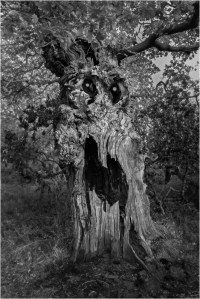
  • In 1st place, with 10 points, an image of a scary tree (below), also by Steven Beard.

Scary Tree in Dalkeith Country Park

So in the end I won the box of chocolates I had brought in to present to the winner! There were some “trick or treat” chocolates for the runners up. Thank you to everyone who entered the competition. There were some good images on show and hope everyone enjoyed taking part. You might well see that box of chocolates again in the near future… The evening finished with a review of the “Match an Image” competition from the previous week.


17 October 2019 (DPI Competition Review)

On 17th October 2019 we reviewed the results of the Digital Projected Images competition, which had taken place 2 weeks earlier.

03 October 2019 (Digital Projected Images Competition)

The judge, Simon Wooton, had left us a very comprehensive set of feedback on the images. This gave us the opportunity to review the competition images and discuss how they might be improved next time. Most members noticed the judge had spotted distractions or faults in their images they hadn’t noticed. This is a common problem. Showing your images to someone else before submitting them can often help. Another technique is to prepare your images weeks in advance, set them aside and forget them, and then look at them again before the competition. Giving yourself more time helps you spot things you might not have noticed.

We discussed some of the common problems reported in the images, and methods of correcting the problems. I have compiled all the advice into a handy PDF document which you can obtain by clicking on the link below.

ImageImprovementTable

NOTE: On 31st October there will be a Halloween digital knockout competition. Please bring along 1, 2 or 3 JPEG images on the theme of Halloween/Gothic/Horror/Trick-or-Treat/Costumes/Ghosts/Graveyards… or anything else vaguely related to the Halloween season. The best image on the night wins a prize.

24 October 2019 (Match An Image Competition)

Members will recall that last February we competed with North Berwick Photographic Society in a new competition format called “Match An Image”, in which each team has 30 seconds to match an image displayed by the other team. We did rather badly in that competition because we weren’t used to the format. Click the link below to see what happened last time.

14 February 2019 (Match That Image)

On 24th October 2019 we had a rematch with North Berwick. This time they hosted the competition and entertained us with a delicious collection of cakes and biscuits. The competition was judged by Andy Bennetts. We were better prepared than last time, and this year the competition was a lot closer. By half time the competition was neck and neck at 16 points each. We opened the second half by attempting to repeat our trick of matching an image of a spider with a herd of elephants. This time it didn’t work, and North Berwick took the lead. They stayed ahead until we managed to catch up by matching their image of a group of mushrooms with our image of a cauliflower! Then we won three consecutive rounds with images of a canoeist, a showjumper and a light house, and we moved ahead. The rounds became more chaotic as we tried to match their images with fewer to choose from. At the end of the competition we played our last image – Jim Tod’s “Church Of The Santissimo Redentore”. Astonishingly, they managed to match it with their final image of a building the same shape. But their final match didn’t help much. In the end, Musselburgh won the competition by 32 points to 27.

Thank you to North Berwick for hosting us, and thank you to everyone who submitted images and helped us to win.