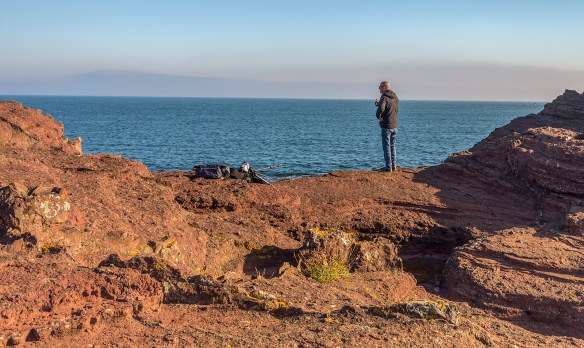
Photo Advice Night This Thursday

This Thursday is photo advice night. Please bring along 1, 2 or 3 prints of any subject. They don’t need to be competition quality. They don’t need to be mounted, but you can bring in a mounted print if you would like feedback on the mounting. We will sit around tables and discuss the prints in front of us. It’s a good opportunity to show your work or get some advice from fellow members.


19 September 2019 (Introduction To Photography)

This week I gave an introduction to photography presentation for club members. Whereas last year I gave a demonstration with my own camera, this year I encouraged members to bring their own cameras and try some exercise themselves. My slides were very similar to previous presentations, and you can download a full set of notes by clicking on the link below.

MCCIntroductionToPhotographyNotes

This time I included some exercises where members photographed sheets of white and black paper and observed how their camera behaved in auto exposure mode. I also set up two makeshift studios: one where a piece of sea coal could be photographed against a white background and another where some white sweet peas could be photographed against a black background. If you are new to photography, or are just starting with a new camera, here are some points to take away:

  1. Learn how to configure your camera so it displays a histogram. For some cameras this involves viewing an image and then pressing an “info” or “display” button to cycle through the various options. Your camera’s instruction manual will tell you how to do it. A histogram that is bunched up on the left hand side suggests your image is under-exposed and a histogram bunched up on the right hand side suggests your image is over-exposed.
  2. If you are new to photography, or are trying out a camera for the first time, start by using the “Auto” modes provided by the camera. When you use these modes you are telling the camera to decide what settings and exposure to use. It helps if you give the camera information on the kind of photography you are doing. There might be special auto modes labelled “landscape”, “portrait”, “sport”, “night scene”, etc… You will find some camera controls locked in these modes (for example the flash pops up when you don’t want it to), which can be frustrating when you want to take more control. The next mode to try is “P”: This is still a fully auto mode (the camera decides on both the aperture and shutter speed) but it lets you take full control over other settings, such as ISO (sensitivity) and flash mode. The most popular modes for creative photography are “A” (set the aperture and let the camera decide the shutter speed – useful for landscapes, portraits and still life) and “S” or “Tv” (set the shutter speed and let the camera decide the aperture – useful for sport and wildlife telephoto shots). But the most creative and flexible mode of all is “M” (manual). Here you take full control of all the camera settings. Manual mode is essential for getting good shots in very unusual situations where the camera meter no longer works properly (for example astrophotography).
  3. All the camera modes except “M” are automatic modes where the camera chooses the overall exposure. Since the camera doesn’t know what it is photographing, it can make mistakes. A white piece of paper and a black of paper are rendered almost the same shade of murky grey. Look for a button on your camera with a symbol similar to the one below. This is the “exposure compensation” button. You can use it to correct the mistakes made by your camera. For some cameras you can adjust the exposure compensation by holding down this button and turning one of the control dials. Other cameras might have a special dial labelled -3,-2,-1,0,+1,+2,+3 which you can turn to the required setting. Changing this setting to +1 when photographing the white paper adds 1 stop to the exposure, and the paper should look a much better shade of white. Changing the setting to -1 when photographing the black paper subtracts 1 stop from the exposure, and the paper should look a more satisfying shade of black. You can fine-tune the setting until the histogram on the back of the camera looks right (see point 1). Don’t forget to restore the setting back to 0.0 when you have finished.

  4. You can bend a sheet of white or black card into a curve and stick it with masking tape between a horizontal surface (table?) and vertical surface (wall or plastic box?) and make an “infinity curve” (or “infinity cove”). This creates a space where you can photograph objects against a plain background which looks like it never ends. These can be quite expensive when purchased as part of a studio, but a piece of card is a much cheaper alternative. The best way to use an infinity curve is with a diffuse light source which casts no shadows. If the natural light in your room doesn’t work, try pointing your flash straight upwards and ask someone to hold another white piece of paper above your camera so the light is reflected from it.
  5. When shooting against a white background, try a positive exposure compensation and when shooting against a black background try a negative exposure compensation (see point 3). You can also try using your camera’s “spot” exposure mode and place the spot on the object.

Joe finished the evening by giving a mounting masterclass with the club’s new mount cutter.

I hope my presentation helps you get the best use from your camera. Best of luck. 🙂
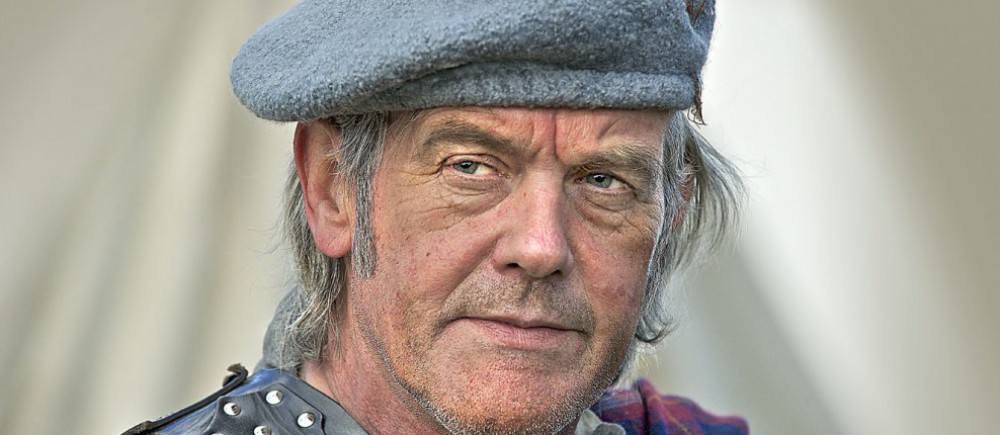
 

Introduction to Photography

I will be presenting an introduction to photography at Musselburgh Camera Club this Thursday, 19th September 2019. A reminder to bring along a camera if you would like to join the practical demonstrations. A close focusing or macro lens would help, but isn’t compulsory.

The club still needs volunteers to help with the stand at the Musselburgh Communities Day at the Brunton Hall from 11am-3pm on Saturday, 21st September 2019.  If you are passing by the Brunton this Saturday, please drop in.


12 September 2019 (Recorded Lecture)

On our second club night of the 2019/2020 season we watched a CD of images accepted into last year’s Dingwall National Projected Image Competition. We watch these images to give us some inspiration and also see what kind of images are popular at the moment. In the “Landscape” section there were many photographs of reflections and aurorae, but images of a lone tree against a snowy background seemed to do particularly well in the competition this time. The “nature” category included a wide variety of images, ranging from a dangling slug to a group of lions.

Next week (Thursday, 19th September) I will be giving my “Introduction To Photography” presentation. Bring along a camera to join in some practical demonstrations.

Some club announcements:

  • Joe Fowler will be giving a photography and mounting class for new members and beginners. If you are interested please see Joe at the next club meeting.
  • Musselburgh Camera Club will be taking part in the Musselburgh Communities Day at the Brunton Hall from 11am-3pm on Saturday, 21st September 2019. We need some volunteers to help look after the display. If you can help please contact Steven Beard at StevenMBeard@aol.com.
  • Jim Tod is arranging two club outings in the near future.If you are interested in any of the four options below, contact Jim at jim@todfamily.me.uk or sign your name on the sheet hanging up on the noticeboard.  Ask Jim for detailed directions.
    • The first outing is a masterclass in seascapes and long exposure photography on Saturday, 21st September. There are two options: (1) Meeting at 06:30am at the old outdoor pool in North Berwick to photograph the sunrise; and (2) Meeting at 09:30am at Seacliff Beach (off the A198 near North Berwick).
    • The second outing is an autumn photoshoot in the Trossachs on Saturday 19th or Sunday 20th October (depending on Scotland’s rugby world cup fixtures).  Again there are two options: (1) Meeting at 7.30 am at boathouses south end Loch Ard to capture the early morning light; and (2) Meeting at 10:00am at Kinlochard Village Hall.

Some photographic opportunities coming up:

Welcome to the 2019-2020 Season

Welcome to the 2019-2020 season!

I would like to welcome everyone to another season with Musselburgh Camera Club. Thank you to all who came along to this week’s opening night, especially to the potential new members who I hope we can make feel at home. If you signed up with the club you will have been given a printed copy of the syllabus. You can also find a copy of the syllabus on the web site by clicking here.

New members will also have received a copy of the guide to club competitions. You can also download a digital copy of this document by clicking the link below.

MCCCompetitionInformation

The competitions start early this season, and entries for the Digital Projected Images (DPI) competition close next week, 25th September 2019!

We begin the new season with a refurbished laptop, thanks to Jim Tod.

Congratulations to Malcolm Roberts for winning the Sunday Times weekly “big shot” photography competition on 9th June with his shot of Antelope Canyon!

The club now has a mount cutter which members can use to improve the appearance of their mounted prints. Joe Fowler has offered to arrange a mounting masterclass for those interested in learning how to use it. Watch this space…

A reminder of some events coming up:

Please click the link below to see the club’s privacy policy, which explains how we use the contact information you provided when you signed up. It should be fairly straightforward, since we don’t pass on your information to third parties or use your details for any other reason than running club activities.

MCCDataPrivacyPolicy

I look forward to seeing you next week, when we will share an inspiring CD of high quality images from the Dingwall competition.


Entries Needed for the 2019/20 Digital Projected Images Competition

A reminder that the club is accepting entries for the 2019/20 Digital projected Images (DPI) competition. Please send your 3 images to George Todd at georgetodd1957@me.com, or bring them along to the club night on 12th September, which is the closing date.

Images should be saved as JPEG files and scaled so the longest side is no more than 1600 pixels in size and the shortest length is no larger than 1200 pixels in size. This means 4:3 ratio images can be sized to 1600×1200 pixels but 1:1 ratio images should be sized to 1200×1200 pixels.

If you have only just joined the club and would like to enter the competition but don’t know how to resize your images, send them to George anyway. We’ll give new members the benefit of the doubt, as it’s better to enter your images and get the feedback. We can show you how to resize your images for future competitions.


Opening Night for the 2019-2020 Season

The opening night for the 2019-2020 season takes place at the Fisherrow centre room G3 at 7:30pm this Thursday, 5th September. Come along to meet new members or try out the club, have some tea and chat and hear what the new season has to offer.

Click here to check out the latest syllabus on the web site.

NOTE: Submission for the Digital Projected Image competition is due on Thursday, 12th September 2019, only one week later. It’s time to select and prepare your three images. Please scale your images so they fit within a 1600 x 1200 rectangle and save them as JPEG files. I can show beginners how to do this on the opening night.

Events Coming Up

There are some events coming up which might be of interest to photographers: