19 February 2026 (Fiona Brims: I am not a wildlife photographer … But …)

This week we were delighted to welcome Fiona Brims back to Musselburgh. Fiona had previously given us a talk on creative portraiture, where she had talked about her journey from beginner to expert in creative portraiture. This talk was different. Fiona admitted she is no expert at wildlife photography, mainly because she doesn’t like waiting in a hide for hours, but that doesn’t take away the joy of capturing photos of wild animals when the opportunity arises. Fiona recommended the following nature hides

but she usually goes to the public part of the hide, rather than the part reserved for photography bookings. Not being in a photography hide usually means the photos are taken from further away, or are taken from the wrong angle. So, most of the photos are not up to competition standard, but that doesn’t take away the joy of capturing a glimpse of a wild animal in its natural habitat. Fiona’s talk was divided into 4 parts:

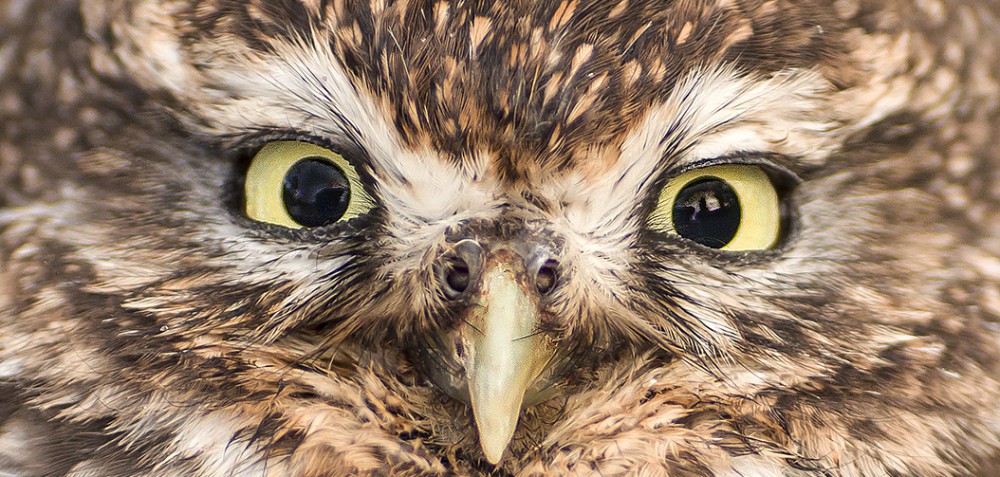
  • Wild Birds and Animals. Fiona showed us some of her photographs of wild birds; from a short-eared owl photographed at Sheriffmuir, to a shot of a grey heron taken at close range, which Fiona described as “vicious” (don’t get too close to a heron). Some bird of prey shots came from the Hawk Conservancy Centre in Andover, and the ICBP centre in Newent (which has recently closed). The most captivating shots show an animal doing something different, such as the shot of a red squirrel drinking from a pond in Blairgowrie. A deer with 3 antlers was spotted at St Syrus Nature Reserve in Aberdeenshire, Fiona also compared shots of wild animals she had taken in South Africa and India, showing us the differences between the African and Asiatic lion. You can see some of Fiona’s wildlife photographs in her galleries: Birds of prey; Wildlife of India and African Wildlife.
  • Captive Birds and Animals. Fiona had visited animal sanctuaries, such as World of Wings and Munchester Castle, where you could get closer to some exotic birds, including an Egyptian ibis, a hooded vulture, several different kinds of owl, a goshawk and a black-chested buzzard eagle. Apparently, you can tell the size of a bird’s prey by the size of its talons.
  • Reptiles and Amphibians: We then moved indoors where Fiona showed us some shots of snakes, lizards, geckos and frogs under indoor lighting conditions. Some of the creatures were contained in a glass case, but you can eliminate the reflections from the case by pressing your lens against the glass. She also advised us to take a glass cleaning cloth, because you’ll find these glass cases almost always covered in fingerprints.
  • Creative Creatures: In the final part of the talk, Fiona revealed her expertise in creative compositions; showing us still life creations, where a snake curls around a clock or a raven investigates a model skull. Fiona sometimes uses animals in her creative portraiture, for example as seen in her Vikings gallery.

We finished with tea and biscuits as usual. Thank you Fiona for another fascinating talk.

  • Next Thursday (26th February) we will find out the result of our second set subject competition on the theme of “Emotion”. The deadline for entering the third competition, on the theme of “Comedy”, is a week later on 5th March.

19 September 2024 (Fiona Brims: My Journey into Creative Portraiture)

This week we were delighted to welcome our first speaker of the year, Fiona Brims. Fiona’s work can be found on her web site, where you can also sign up to her workshops:

https://www.fionabrimsphotography.co.uk/

Fiona described her journey into creative portraiture, which she defined as the creation of an image that is not a normal portrait, such as an unusual situation, an unusual location or an unusual prop. Fiona began by showing us her very first images from a photoshoot at an old paper mill in Bo’ness, where the idea was to shoot a bride in an unusual situation. Although it was a great idea, Fiona bravely pointed out all the mistakes she had made as a beginner:

  • There was insufficient attention to the lighting, which meant the models often had harsh shadows across their faces and no catch-lights in their eyes. Fiona had used a Weetabix packet with tracing paper as a soft box, but she could have used another light or a reflector to light the faces. She also pointed out that every pose needed careful light placement. It wasn’t sufficient to place lights on each side of the model and leave them there.
  • Always remember to iron the outfits before using them, as a photograph will reveal all the creases. Also, remember that a strongly coloured outfit could reflect light on the same colour onto the model’s face. Be prepared to correct the colour or cancel it with another light.
  • Don’t overdo your corrections in Photoshop, as they can make a portrait look unnatural. Less is more.
  • The model’s pose, expression, location and props need to make sense to the viewer. They need to tell a story, although each viewer might make up their own story.

The next set of images showed how Fiona had learned from her mistakes and improved. There were some outdoor shots at Bo’ness Railway Museum and St. Peter’s Seminary (which was a great place for graffiti but is now unsafe to access). [Note: The A1 tunnel at Newcraighall is closer to Musselburgh and easier to access for graffiti.] Fiona moved on from outdoor shots to renting a real studio, and moved on from photographing friends to photographing models. Moving on to professional models and professional make-up makes a big difference in quality, but it also costs more money. Fiona emphasised that you’ll need money to pay for the studio, the model, the make-up, the outfits, the props and the backdrop. But you can save money by looking for second hand bargains, for example buy your props from ebay, or look for outfits in charity shops. Remnant Kings is a good place to find material for backgrounds. If you want to try studio portraiture, you can join an organised model day, where a studio will rent hourly slots with a professional model.

Fiona finished by showing us a collection of stunningly good portraits that she had taken recently. Her journey into creative portraiture had been a learning experience, but it had lead to a flurry of creativity. See for yourself at her creative portrait gallery. Thank you Fiona for enlightening us.

  • Next Thursday we have a Members Evening. Please bring along any images you would like to share with other members. I expect we’ll see a lot of images from the Battle of Prestonpans, which happened at the weekend.

07 December 2023 (Black and White Print Competition)

Our Black and White print competition took place on 7th December 2023, judged by Fiona Brims, who travelled to us from Central Scotland. Fiona’s work can be found on her web site, where her work on creative portraiture stands out in particular.

https://www.fionabrimsphotography.co.uk/

28 prints had been entered by 10 members, which was fewer than usual, so Fiona had time to comment on each print in detail. She gave some useful, amusing and considered feedback explaining how each of the prints could be improved. Fiona introduced us to three tongue-in-cheek terms. Oomph! A print needs to have an impact. Increasing the contrast and making sure the background gets darker towards the edge all help to keep the eye on the subject. Smidgeon. Lightening some of the shadows by just a smidgeon could help improve the visual impact. Meh! Some of the blank skies, areas of empty grass or open water made boring areas in between areas of interest. Try to minimise the boring areas by changing your viewpoint to reduce their size or by boosting their contrast. Fiona found there was something to like in each of the prints. There were some nice compositions with a good tonal range, some striking and atmospheric landscapes and some studies with an emotional impact. There were some prints which gave a fantastic first impression but Fiona was disappointed to find were not sharp when viewed closely, or they had smudges or cloning faults in the background. Fiona recommended that when photographing an object it is important to have an anchor point to put that object in context. So, for example, a photograph of a typewriter could be improved by showing some of the desk it is sitting on, or a photograph of lights dangling from a tree needs to show where the lights are attached. There were also a few black and white portraits. Fiona explained that she liked to see a catchlight in the eyes, which improves the empathy with the viewer. At the end we had plenty of time to chat and review the prints over tea and sandwiches. The top scorers were (in reverse order):

  • 4th place (46 points)
    • Jim Innes
  • 3rd place (48 points)
    • Jennifer Davidson
    • Mike Clark
    • Carol Edmund
  • 2nd place (50 points)
    • Derek Muller
  • 1st place (55 points)
    • George Todd

The top images were:

  • Man on a Tram (George Todd) – 20 points
  • Suffering for your art (Derek Muller) – 19 points
  • Patiently waiting for prayer to finish (George Todd) – 18 points
  • Exhausted (Carol Edmund) – 18 points

Well done to George Todd, who wins the competition, and to Derek, Jennifer, Mike and Carol, who came close.  Fiona will return next year to give us a talk.

There is now only one meeting left at Fisherrow before Christmas. Come along next Thursday (14th December) at 7pm for our annual quiz night.