27 November 2025 (Jean Manson: Realm of the Tiger)

This week we welcomed back Jean Manson to the club to tell us more about her passion for wildlife conservation through the medium of photography. You can see some of Jean’s work in her gallery site and her Zoological Photographic Club page:

https://www.jeanmanson.gallery/browse/

https://zpc-naturefolio.weebly.com/jean-manson.html

Last time, Jean spoke to us about the wildlife in Alaska in “A Fragile Wilderness”, where she had remarked on the sparseness of the human population. This time, we learned about her recent visits to India, where the human population is much denser but there are still national parks devoted to preserving the natural wildlife. In 1973 the Indian government initiated Project Tiger, which set up wildlife reserves to protect the endangered Bengal tiger. Due to the success of that project, India now has the largest tiger population in the world. Jean visited two of those wildlife reserves:

Jean explained how her guides would track the tigers by looking for pugmarks, scratches and tell-tale alarm calls from other animals. She explained how tigers and leopards are in competition with each other, so you tend not to see both at the same time. During her visits she had seen more leopards in Satpura and more tigers in Bandhavgarh. She showed us photographs not only of the majestic tiger and leopard, but of birds, elephants, chital deer, monkeys, giant squirrel and a very rare grey wolf. Jean brought some of the prints and display boards from her recent exhibition at the Biggar Little Festival, and we finished the evening chatting and browsing through the prints. Thank you Jean for a very entertaining and enlightening evening.

  • This Thursday, 4th December, we have our Black and White print competition, judged by Malcolm Lind.
  • It’s also time to prepare entries for the Human Portrait print competition. The hand-in date is 11th December.

20 November 2025 (Soft Focus and Double Exposure Workshop)

We spent the club meeting on 20th November learning some techniques that we could try on our Saturday photoshoot at the Royal Botanical Gardens in Edinburgh. We tried two different techniques:

1) Double Exposures

This technique combines two or more exposures together to create a surprising result. Try “double exposure photography examples” as a Google search to see some example images. Common examples include portraits blended with natural or architectural silhouettes, or multiple poses blended together. Exposures can be combined in-camera, or they can be captured separately and blended later using software such as Adobe Photoshop. The following YouTube videos show how to set up a Canon camera:

Ask David Bergman: A Step-by-Step Guide for In-Camera Multiple Exposures

Eric Floberg: How to Shoot a DOUBLE EXPOSURE In-Camera [2023]

If you explore the “shooting menu”, you’ll find Nikon cameras have a similar setup. We discovered that all our cameras had slightly different ways of setting up double exposures, and the newer cameras had more options. If your camera doesn’t have a multiple exposure option, you can still take single exposures and blend them in Photoshop. We tried a few experiments inspired by Leonardo de Vinci’s Vitruvian Man.

2) Soft Focus Techniques

Hans van der Boom had given the club a talk on improving flower photograph using soft focus techniques back in April 2024. Bob Daalder also describes how he uses soft focus techniques in macro photography in the following blog:

Macro Photography: Discover the Little World with Bob Daalder

We explored the following soft focus techniques:

  • Using a wide aperture to blur the background.
  • Making a double exposure (as described above) but combining an in-focus image of a flower with an out of focus image.
  • Using coloured cellophane to mask off an area you want to be out of focus.
  • Using an out of focus image of a crinkled piece of Aluminium foil to create some foreground bokeh.

We discovered that both techniques need a lot of practice to get right, but it is fun to experiment. We came away from our Botanics photoshoot with lots of weird and wonderful images.

10 April 2025 (Stephen Ball: Scotland Behind the Lens)

This week we were pleased to welcome Stephen Ball to Musselburgh as our last speaker of the 2024/25 season to give us one of his signature talks on landscape photography: Scotland Behind the Lens. Stephen is originally from London but moved to Scotland in the 1990s. He started his career as a theatre lighting designer and technician before moving into photography, and has recently won several landscape photography awards. You can read more on his “Scotland Captured” web site.

Stephen used to use a Nikon D7100 but has recently switched to a Nikon Z7, which gives a better image quality. His standard kit consists of a tripod, a collection of kit lenses and a set of Lee filters (neutral density, graduated and polarizer). Stephen explained that he likes to get his images right in camera. He uses Adobe Lightroom only for minor adjustments, such as cropping or adjusting the colour saturation. He will occasionally adjust the highlights when there are bright lights in the scene (such as the spotlights on the Queensferry Crossing). He likes to visit places very early in the morning or late at night when there are fewer people around. When Stephen photographs a landscape, he sets his camera on a tripod and takes the time to look at the scene and think about the composition. He avoids the temptation to take a large number of quick snaps, and the tripod helps him slow down. He adjusts the exposure manually and likes to choose a low ISO (such as 64 or 100) and small aperture (such as f/16 or f/22) to get the best image quality with the maximum depth of field. If there are many focal points in a scene, he will increase the depth of field by focus stacking. Stephen avoids using a wide angle lens to capture a panorama because it distorts the edge of the scene. Instead, he builds a panorama from several overlapping shots made in portrait orientation. He has also started experimenting with shots cropped to a square format.

Besides photographing Scottish landscapes, Stephen also likes to photograph the Edinburgh Tattoo, arranged through his membership of the Beautiful Edinburgh Facebook group. He explained how he uses different camera settings for these images. He selects a higher ISO setting for these darker scenes, and normally begins the evening with an aperture around f/11 to get a good depth of field, but when it gets darker he changes to “Auto ISO” and uses wide apertures like f/4.

Stephen took us on a tour of Scotland pictured through his lens, starting with popular locations like the Crawick Multiverse, Stobo Japanese Gardens and Leaderfoot Viaduct in southern Scotland and locations closer to home such as Dalkeith Country Park, Seacliff Beach, Preston Mill, North Berwick and Bass Rock. He also showed us iconic scenes in Edinburgh, from the picturesque Dean Village to citywide views from Calton Hill. Stephen also showed us how he obtained some unusual shots of the Forth bridges in the early morning mist, and he found the platform at Dalmeny Station gives an unusual view peering down the length of the rail bridge. He then took us further afield, showing beautiful scenes from all over Scotland, including an autumn scene at Loch Dunmore, some misty shots of Loch Ard, frosty images of Rannoch Moor and mountain scenes at Buachaille Etive Mor, Glencoe and Sligachan, Isle of Skye. Many of Stephen’s images had been taken only a week or two ago, showing us what we could expect to see if we were to travel to these places right now. Stephen finished his highland shots with a recent image he had captured after a long climb to the Old Man of Storr, where the view was so breathtaking that Stephen almost forgot to take any photographs! Thank you, Stephen, for inspiring us with so many beautiful shots of Scotland.

  • Next week we have a our “Best Image of the Night” evening. This is a fun, informal evening where we discuss and vote for our favourite images on the night. Please bring up to 3 images, either in JPEG format on a USB stick, or as prints, or a mixture of both. Prints can be any size (as long as they are large enough to see from the room) and don’t have to be mounted, although mounted prints are fine as well. I look forward to seeing what you bring.
20 February 2025 (Joe Gilhooley: If I Can Do It, You Can Do It)

The club was delighted to welcome Joe Gilhooley from Loanhead, Midlothian to talk about his work. Joe’s interest in digital photography began in 2010, when he wanted to record his daughter growing up. He purchased a Canon DSLR and took the camera on family trips. He developed a liking for landscape photography but fell into the usual trap of coming home with 400 scattergun images of the same scene. He now recommends pretending you have a roll of film and only capturing the small number of images you think are worth keeping. Joe has 3 Canon DSLR camera bodies, a Sony compact camera, and a selection of 9 lenses. He always uses a tripod for landscape photography and recommends using the camera in “mirror up” mode with a remote shutter release to prevent camera shake. Joe’s love of landscape photography won him the “Scots Magazine Photographer of the Year” award in 2017 and 2019. Joe joined the Royal Photographic Society in 2020 and achieved an LRPS qualification in 2021 and is working towards the ARPS qualification. You can see more of Joe’s work on his web site:

http://www.joegilhooley.co.uk/

Joe started by showing us the 10 images he had submitted to win his LRPS qualification, which included a night view of the Forth Bridges, a night view of Edinburgh from Calton Hill, star trails over the Belhaven Bridge and a clever still life which simulated colours being painted onto a bowl of fruit. Joe likes to take his landscape images during the blue hour: the hour just before sunrise or just after sunset when sky is still bright enough to give a blue background. Joe watches the weather forecast and will often drive to a location at short notice to arrive in time for the perfect conditions. Calm conditions at sunrise are ideal for capturing still reflections and morning mist. Joe took us on a journey across Scotland, showing us a wide variety of excellent images of castles, gardens, monuments, lochs, mountains and iconic viewpoints. His subjects included landscapes, cityscapes, wildlife, star trails and fireworks. In 2022, Joe successfully applied for a press contract to photograph the Edinburgh Military Tattoo, which gave him the opportunity to capture some beautiful images of the event. Joe had also offered his services to several football clubs, and had obtained a press pass to capture images of key moments during their games. Joe finished by showing us some of his sports photography images. Joe uses two camera bodies for his sports photography. One body has a 400mm lens attached, which he uses to capture distant action. The other has a 70-200mm lens, which he uses when the action gets closer. He uses fast (f2.8) lenses and a very high ISO to achieve the fast shutter speeds required for sports photography. A monopod helps to support the weight of his heavy 400mm lens.

It was a fascinating evening where Joe gave us hints about good places and times to take photographs and encouraged us not to be afraid to contact organisations like sports clubs and local newspapers who may need a local photographer.

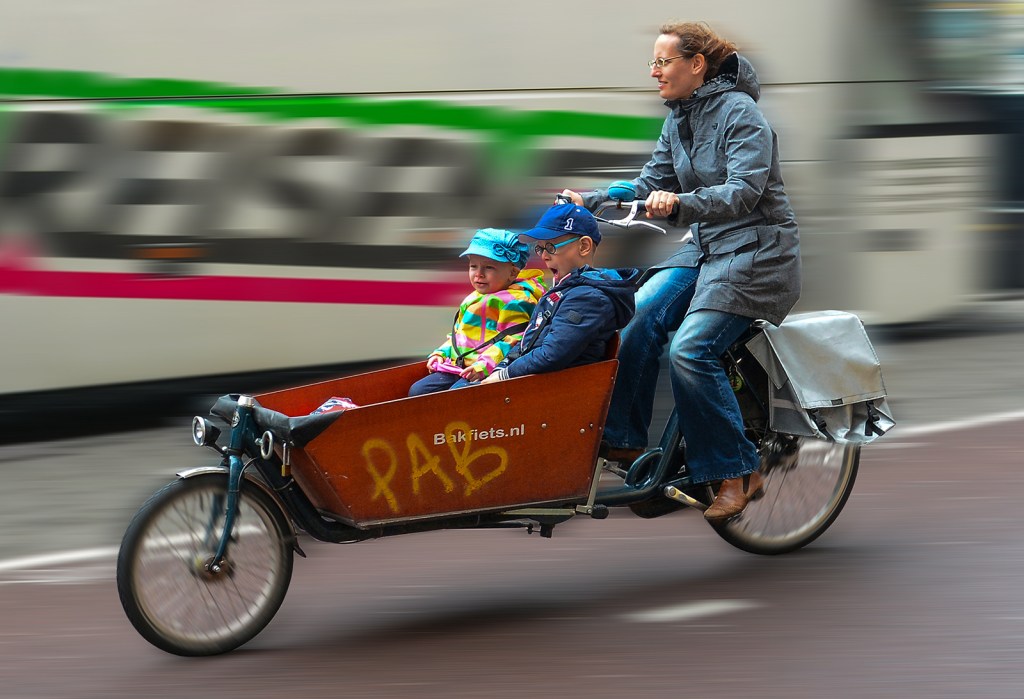
  • We are having our “Sense of Speed” club photoshoot this Saturday, 22nd February at 10:30am in Lewisvale Park, Musselburgh, EH21 7AR. Bring your camera to practice photographing bicycles, dogs and people moving against a background. For best results bring a lens with a large maximum aperture, such as f2.8.

16 January 2025 (Gordon Rae: Wild at Heart – A Photographer’s Journey)

This week we were delighted to welcome award-winning wildlife photographer Gordon Rae to Musselburgh to talk to us about “Wild at Heart – A Photographer’s Journey”. Gordon had last visited a year ago when he judged our human portrait competition and gave us a short talk on the “Birds of Iceland”. Gordon explained that he had started as a farmer in South West Scotland with an interest in landscape photography. A local magazine liked his landscape photographs and signed him up. His career in photography took off when he began photographing the local wildlife, joined Dumfries Camera Club and began giving tours for other photographers. He now gives 10 tours a year. Gordon uses a Nikon camera with a 200-400mm lens and 1.4x teleconverter. He likes to take his shots from close to the ground, which makes it easier to get a narrow depth of field. He also likes to use space in his shots to show the creatures in their environment. You can find some of Gordon’s work on his web site:

https://www.gordonraephotography.co.uk/index.html

Gordon began by showing the wildlife photographed in his local area, including birds and hedgehogs in his garden. Gordon travels around his farm on a quad bike and uses it as a tool to get close to wildlife. His strategy is not to use a hide, but to keep repeating the same actions until the wild animals get used to him and realise he is not a threat. The local hares will let him get close as long as he doesn’t get off the bike. As well as great shots of hares, dippers and kingfishers, there were some unusual dark squirrels and a fantastic shot of a grumpy sparrowhawk. Gordon then took us further afield and showed some fabulous shots of ospreys, grouse and mountain hares taken in Scotland.

In the second half of the talk. Gordon described his adventures on a bear-watching trip to Silver Salmon Creek in Alaska. The journey there was an adventure in itself, with the site only accessible by a small aircraft which landed on the beach! Visitors to Silver Salmon Creek Lodge live and move within the habitat of the bears and need to be constantly on watch. Gordon described some hair-raising encounters with the bears. He witnessed a mother defending her cubs, a bear running towards him to pounce on a salmon, and a bear that came so close that other photographers had turned their cameras on him! The results were some truly breath-taking images. Gordon finished his talk by showing us photographs he captured on a trip to Churchill in Manitoba, Canada. After arriving in the autumn, he witnessed how quickly the Hudson Bay can freeze. This time polar bears were his main subject, although he also captured some images of the local foxes. The polar bears were photographed from the giant tundra vehicle, and the driver was happy to position the vehicle to capture the bears against a more interesting background. Gordon left us all inspired to improve our wildlife photography.

  • Next Thursday we will use our Members Evening slot to have another studio portrait session. We can practise some of the advice we learned from last week’s portrait competition. It will be similar to last year’s studio night, except this time we’ll concentrate on the lighting. Derek will bring along his studio lights, and we can move the lighting around and see how it affects the final result.
  • Please bring your camera on Thursday, plus a tripod and a flashgun if you want to experiment with those.

31 October 2024 (George Robertson: Exploring Kathmandu and the Khumbu Valley)

This week we were delighted to welcome back George Robertson to the club. George had already entertained us with two previous talks featuring stunning mountain photography:

23 September 2021 (Into the Throne Room of the Mountain Gods)

22 September 2022 (George Robertson: The Snows of Kilimanjaro)

This time George enthralled us with photographs documenting a trek from Kathmandu through the Khumbu Valley to the Mount Everest base camp. George is a member of Milngavie and Bearsden Camera Club and has been running the mountain trekking company Mountaintreks for a number of years. George’s photography had begun from a need to record the experiences of the clients on his mountain adventure treks but had expanded into the fantastic collection of mountain landscapes you can now see on his web site:

George Robertson Photography

The journey begins at Kathmandu, a place full of jumbled, multi-colour buildings and picturesque Buddhist temples. The group then catch a flight to Lukla, perhaps one of the most dangerous airports in the world. All flights to Lukla take place early in the morning to avoid the fierce winds, and the short runway slopes upwards at 12 degrees to help aircraft stop before hitting the concrete wall at the end! From here, the rest of the journey is on foot along a narrow, rocky road dotted with monuments and engraved symbols. Literally everything, from luggage to building materials, is carried down this road either by pack animal (dzo) or on someone’s back. George documents this journey with a series of stunning photographs showing the towns and people encountered on the way and the increasingly stunning views of Mount Everest, Lhotse and Ama Dablam. All of George’s photographs were taken with one camera body and a single 18-200mm lens. He didn’t take a tripod but managed to get some fantastic night shots of the mountains by balancing his camera on a rock. The talk finished with the group’s arrival at the Everest base camp and a series of jaw-dropping photographs of the mountains at sunset. Thank you George for entertaining us yet again and showing us why you have twice won a Landscape Photographer of the year award.

  • Next week’s colour print competition has been moved to 14th November, so will have our members evening on 7th November instead. Please bring along any interesting images or ideas you would like to share with other members. We can also take the opportunity to finish the back and white printing.

Breaking news: Scottish Nature Photography Award Winners

The winners of the Scottish Nature Photographer of the Year 2023 Awards have been announced. Charles Everitt, who gave us a talk just a couple of weeks ago, has been announced the overall winner. Here is the BBC news article:

BBC: In pictures: Nature photography award winners

I think Charles’ winning image was one of the ones he showed us during his presentation. Congratulations to Charles!

  • Please note that Musselburgh Art Club have cancelled their visit to Musselburgh Camera Club this Thursday. We’ll have a members’ evening instead. Stephen is going to try to move us back to room G3, so please check room G3 before going upstairs to room F1.

21 March 2024 (Set Subject Competition C – Flowers)

Thursday saw the conclusion of our 3-part set subject competition. The third part on the theme of “Flowers” was judged by Gordon Davidson, who had won last year’s competition. 11 members had entered 33 images altogether, with a wide selection of floral images ranging from wide shots of entire flower beds to portraits of a single specimen, including a Karen Woodcock’s “Happy Wee Poppy” that looked like it was smiling. Gordon commented on the detail and composition of each image. Some images had lost detail through a slightly offset focus or too little resolution. It is easy to over-exposed a flower when brightly lit, and some images had lost detail in their highlights. Gordon also pointed out some blobs and halos that he found distracting in the background. Nevertheless, Gordon liked most of the images, which meant there were a lot of high marks. The top scorers were (in reverse order):

  • 5th place (50 points)
    • Joe Fowler
  • 4th place (51 points)
    • Gavin Marshall
    • Jim Innes
  • 3rd place (54 points)
    • Steven Beard
    • Derek Muller
  • 2nd place (56 points)
    • John West
  • 1st place (57 points)
    • Jennifer Davidson

The top images were:

  • Red Roses (John West) – 20 points
  • Let us out! (Jennifer Davidson) – 19 points
  • Blue Lily Head (Jennifer Davidson) – 19 points
  • Pink Daisy (Jennifer Davidson) – 19 points
  • Dandelion (Steven Beard) – 19 points
  • Yellow Lily (John West) – 19 points
  • Pink Rose (Carol Edmond) – 19 points
  • Backlit Sunflower (Derek Muller) – 19 points
  • Purple Plant (Joe Fowler) – 18 points
  • Frosty Rose (Joe Fowler) – 18 points
  • Red Dahlia (Steven Beard) – 18 points
  • Turkscap Lily (Elaine Gilroy) – 18 points
  • Tulip Fields (Jim Innes) – 18 points
  • Thistle From Above (Derek Muller) – 18 points

Well done to Jennifer Davidson, who wins the right to judge next year’s competition. Also well done to John West, whose image of red roses achieved the highest mark. The latest scores have evened up the league table, making the final result close, but after consulting the final spreadsheet I can reveal that the final result from all three competitions is:

  • 1st place
    • Jennifer Davidson (53 + 57 = 110)
  • 2nd place
    • John West (50 + 56 = 106)
  • 3rd place
    • Steven Beard (51 + 54 = 105)
    • Elaine Gilroy (51 + 54 = 105)
    • Derek Muller (51 + 54 = 105)
  • 4th place
    • Carol Edmond (54 + 50 = 104)
  • 5th place
    • Joe Fowler (52 + 50 = 102)

Well done to Jennifer for winning the trophy, and thank you to all the members who entered some beautiful images this year.

  • This is the last competition of the season, and George needs to engrave the trophies for the AGM. If you won a trophy last year please return it to George as soon as possible.
  • This coming Thursday we will be hosting Musselburgh Art Club and will be meeting in the upstairs room F1 in the Fisherrow Centre.
  • The season is drawing to close, and we need to decide where to go for our end of season photoshoot on 18th April 2024. Please think of ideas for where we could go and let me have your ideas. I have already had the following suggestions:
    • Meet in Edinburgh for sunset and street lighting pictures.
    • Meet at a local nature reserve, such as Aberlady Bay.
    • Switch the date to Saturday, 20th April 2024, so we can meet earlier when there is more daylight. That would also open up local sites which close before 7pm, such as Dalkeith Country Park and the Gosford House Estate.


14 March 2024 (Charles Everitt: Project Driven Photography)

This week we were delighted to welcome Charles Everitt back to the Musselburgh. Charles gave us a talk 2 years ago featuring photographs from his book “Water of Leith: Nature’s Course”. This year he returned to tell us how project-driven photography had restored his motivation in photography. When Charles began photography 30 years ago he toured popular sites around Scotland and came home with a selection of reasonable good photos showing the same subjects captured by everyone else. But then he decided to try some long exposure shots of the Water of Leith, right in his backyard, and realised the beautiful shot of a rapid he created could have come from anywhere in Scotland. He decided to start a project to tell the story of this hidden gem of a river running right through Edinburgh. He realised that by spending time getting to know one subject you can spot the ever-changing details that are easily missed by other photographers: the pattern of light on the water; the small flowers at your feet; and the changing colour in the reflections as the evening progresses, the sun sets and people switch on lights and close coloured curtains. The result was “Water of Leith: A Nature’s Course” mentioned earlier. The result inspired more projects, such as “Forthshore: East Lothian’s Coastline”, “Mull: Moments and Memories”, and his latest work, “Off Course: Nature Around A Golf Green”. Charles explained that the photographs he creates could be used to create a book, a calendar, a portfolio of prints, a magazine article or a presentation.

Charles now works as a part-time ranger on the Dundas Castle Estate, which gives him a plenty of opportunities to photograph the woodland throughout the year. He likes to create abstract photos from the shapes and textures around him, including some imaginative shots made using Intentional Camera Movement. When an old tree needed to be cut down, Charles took the opportunity to photograph the textures and shapes in the wooden disks before they faded. Charles played us a selection of audio visual presentations created from his project photographs. The first presentation showed us the Water of Leith as it flowed through Dean Village and included some beautiful “leaf, stone and water” compositions. Further presentations explored Charles’ macro images of flowers and fungi. Charles explained that he takes his flower shots from ground level at f/4 with his camera perched on a kneeling pad, and he uses a torch (not a flash) to light up the flower against its natural background. Sometimes he uses two torches: one to light the foreground and another to back-light the subject. He will sometimes shine a light through a coloured leaf to produce a natural colour but never uses coloured filters. Charles also showed us some of the red kite photos he had taken at Argaty Red Kites and some shots he had taken on trips to Bass Rock and Inchkeith Island (including some abstract shots of the water he took during the boat trips). Charles finished with a presentation showing how low-key shots of the Gormley statue on the Water of Leith can, when taken from the right angle, make it looks like a sinister figure rising from the depths.

Thank you Charles for another fascinating and enlightening presentation. I am sure we will all be trying your idea of using a torch to light our flower photographs, although it will be too late for next week’s set subject competition. Please note we have TWO meetings coming up in the next week:

  • On Tuesday, 19th March 2024 at 7:30pm we will be meeting Haddington Camera Club at Poldrate Mill, Haddington for the annual 3-way competition.
  • On Thursday, 21st March 2024 at 7:00pm we will meet as usual at the Fisherrow Centre in Musselburgh for our final set subject competition (Flowers), judged by Gordon Davidson.

08 February 2024 (Human Portrait Print Competition)

Gordon Rae kindly agreed to judge our human portrait print competition at short notice and had travelled to Musselburgh from South West Scotland. Gordon is an award-winning wildlife photographer whose work can seen on his web site:

https://www.gordonraephotography.co.uk

Gordon said he was impressed with the quality of the entries and had judged and scored them to a high standard, so he hoped nobody (especially beginners) would be disappointed with their score. Gordon had identified one winning portrait, plus some second and third placed runners up.

23 prints had been entered by 9 members. The subjects included sports competitors, street artists, musicians, wise men, soldiers, and pictures of other club members. John West had entered a unique, double-exposed, self-portrait called “Doppelganger” which was popular during the tea break. Gordon commented on the composition of the portraits and suggested some crops that would tighten up the subject in the frame. He explained that the “rule of thirds” guideline that is useful for landscape photography is not so important for portraits. Male subjects can be shown looking straight into the camera but female subjects often look better with their head turned at an angle. In some of the portraits there were dark shadows on the face that could have been prevented by using softer lighting (or by balancing the light with a reflector). He also warned photographers to watch out for colour casts in their prints and make sure that the skin colour looks natural. Watch out also for places where the subject could merge with the background (for example a dark coat shown against a dark background of a similar colour) and make sure there is a distinct boundary. The highest scores went to the prints that Gordon judged had captured a moment, showed a great expression, had a good balance of tones and had good backgrounds. The top scorers were (in reverse order):

  • 4th place (46 points)
    • John West
  • 3rd place (51 points)
    • Jennifer Davidson
    • Joe Fowler
    • Carol Edmond
  • 2nd place (53 points)
    • Derek Muller
  • 1st place (54 points)
    • George Todd

The top images were:

  • Kalon (George Todd) – 20 points (and the overall winning print)
  • 96 Years Young (Carol Edmond) – 19 points (and overall 2nd equal print)
  • Beguiling (Derek Muller) – 19 points (and overall 2nd equal print)
  • Katrine (John West) – 18 points (and overall 3rd equal print)
  • He Gets The Joke (Derek Muller) – 18 points  (and overall 3rd equal print)
  • I Love my Purple hat  (Jennifer Davidson) – 18 points
  • Downhill Racer (Joe Fowler) – 18 points

Well done to George for winning the competition and achieving best print with a fabulous portrait of a tattooed boxer, and well done also to Derek, Jennifer, Joe and Carol. Thank you to everyone who entered and thank you to Gordon Rae for judging the competition for us at short notice.

We had some spare time after the competition, so Gordon gave us a short presentation entitled “Birds of Iceland”, which showed the wildlife photographs he had collected on a tour of Iceland (see Gordon’s Iceland gallery for a couple of examples). Gordon explained that he most often used a Nikon 200-400mm lens with a 1.4X teleconverter. Most of his photos are taken at f/5.6, but at low angles he finds f/10 a better choice because the water appears more out of focus at those angles. We enjoyed the talk so much we booked Gordon to give us a full-length talk next year. Watch out for next year’s programme.

  • On Thursday, 15th February we will be joined by Beeslack Penicuik Camera Club for our annual audio visual night. We will be meeting in the larger room in the far corner, G6, not our usual room, G3.
  • If you would like to enter the “contrasting textures” set subject competition, please send your three JPEG files to George Todd this weekend.

See you this Thursday for some AV entertainment.