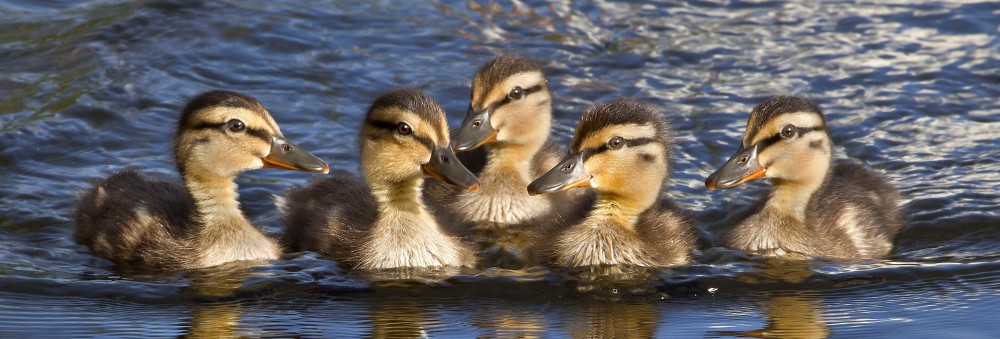
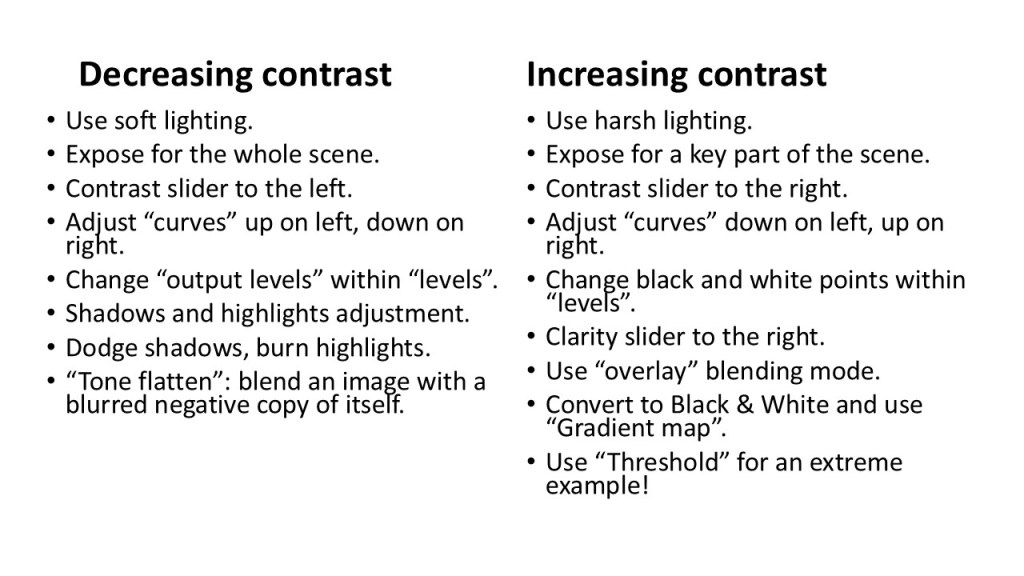
This week we discussed the use of contrast in photography, and the methods a photographer can use to control the contrast in an image. How much contrast you need depends on the kind of photograph you are aiming for. Molly Hollman’s flower photographs, for example, needed a low contrast to reveal their soft beauty. She achieved that by photographing the flowers on a cloudy day, or softening the light with a diffuser. A reduced contrast can also help group photographs or expansive landscapes, where you want to see detail everywhere. But there are some kinds of photography, such as isolated portraits, stark architectural photographs or black and white textures, where a high contrast can improve the impact of the result. Harsh lighting, such as direct sunlight or a single bulb, can help to create these images. Steven showed a slide which summarised the techniques you can use to decrease or increase contrast:
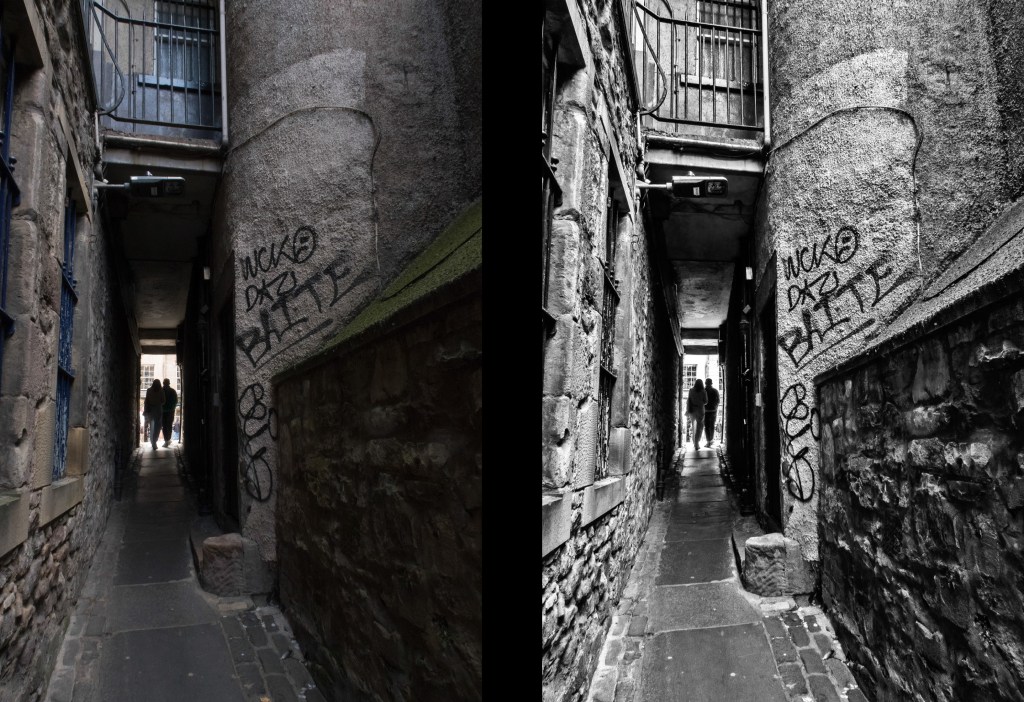
He also showed an example where a combination of these techniques had been used to convert a photograph of a Edinburgh close into a black and white image with a high local contrast, as shown below.
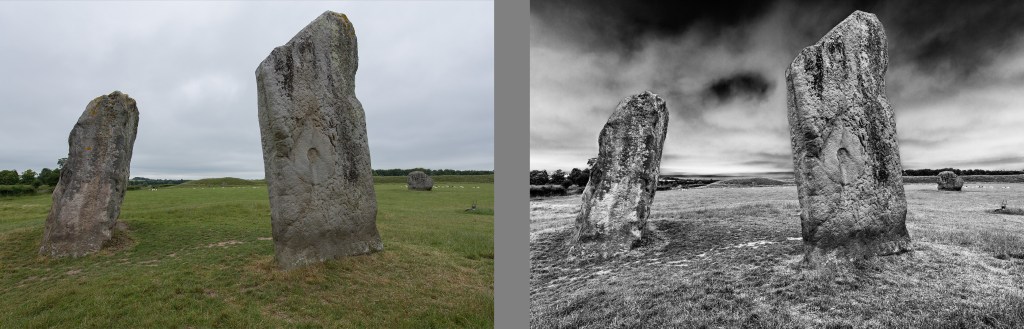
A combination of a “curves” adjustment and a high contrast black and white conversion transformed this image of the Avebury stone circle. More details will be posted on the club members’ Facebook page.
We ended the session by practising some high contrast portrait photography, as inspired by this Instagram video:
At one station we used a white background and a single bulb, and at another station we used a black background and a bright spotlight. A hand-held LED lamp was also found to be useful. We will carry forward what we learned this evening to the “Film Noir” portrait workshop on 22nd October 2026.


You must be logged in to post a comment.