20 November 2025 (Soft Focus and Double Exposure Workshop)

We spent the club meeting on 20th November learning some techniques that we could try on our Saturday photoshoot at the Royal Botanical Gardens in Edinburgh. We tried two different techniques:

1) Double Exposures

This technique combines two or more exposures together to create a surprising result. Try “double exposure photography examples” as a Google search to see some example images. Common examples include portraits blended with natural or architectural silhouettes, or multiple poses blended together. Exposures can be combined in-camera, or they can be captured separately and blended later using software such as Adobe Photoshop. The following YouTube videos show how to set up a Canon camera:

Ask David Bergman: A Step-by-Step Guide for In-Camera Multiple Exposures

Eric Floberg: How to Shoot a DOUBLE EXPOSURE In-Camera [2023]

If you explore the “shooting menu”, you’ll find Nikon cameras have a similar setup. We discovered that all our cameras had slightly different ways of setting up double exposures, and the newer cameras had more options. If your camera doesn’t have a multiple exposure option, you can still take single exposures and blend them in Photoshop. We tried a few experiments inspired by Leonardo de Vinci’s Vitruvian Man.

2) Soft Focus Techniques

Hans van der Boom had given the club a talk on improving flower photograph using soft focus techniques back in April 2024. Bob Daalder also describes how he uses soft focus techniques in macro photography in the following blog:

Macro Photography: Discover the Little World with Bob Daalder

We explored the following soft focus techniques:

  • Using a wide aperture to blur the background.
  • Making a double exposure (as described above) but combining an in-focus image of a flower with an out of focus image.
  • Using coloured cellophane to mask off an area you want to be out of focus.
  • Using an out of focus image of a crinkled piece of Aluminium foil to create some foreground bokeh.

We discovered that both techniques need a lot of practice to get right, but it is fun to experiment. We came away from our Botanics photoshoot with lots of weird and wonderful images.

13 November 2025 (Live Shooting Workshop)

In a wee change in plan, this evening’s programme was provided by Derek to help folks obtain sharper looking photos and to present prints in the best light (see what I did there?) by mounting prints very neatly.

The evening started with a demonstration of mounting prints using double-sided tape. This is suggested in place of using the 3M Photo Mount adhesive. Photo Mount spray can get messy and there is quite a strong smell that can linger for hours. There is also the danger of spreading the adhesive while you set the print in place. The tape is tearable, or you can use scissors. For window mounts, the tape is applied to the four sides of the rear of the window. Using the tape roll to prop up the window front mount to allow the print to be positioned. The protective film is removed from one of the sides and this side is used to secure the print in place. The other three sides can then have their protective strips removed so that each side can be secured in turn. Four lengths of adhesive tape are then stuck to the rear mount card. Again the tape roll can be used to hold the print up off the adhesive tape, to allow positioning and the edges are each stuck down in turn. An additional suggestion was to obtain a roll of wallpaper lining paper. Once cut to size, the paper is easily flattened out under a box for a few hours and it makes a decent “cartridge paper” backing for photographic print mounts.

The rest of the evening was taken up with a few lighting setups with still life subjects. The idea was to see how the direction of light can influence the contrast and apparent sharpness of photographs. When the light was positioned directly in front of the subject, providing flat illumination with little contrast showing. As the light source was positioned further to the side, contrast increases and the apparent sharpness of the image is enhanced. This effect is apparently, is called “acutance”. Look it up on Wikipedia, or better still, just see what effect it has on your photos.

It was an interesting and fun evening, with folks getting the chance to talk to each other.

Regards

Ed

18 September 2025 (Graeme Barclay: Street Photography)

This week we were delighted to welcome our first speaker of the season. Graeme Barclay has a background in hydraulic engineering and started photography in 2017. He is currently a member of Midlothian Camera Club, but also has links to Falkirk Camera Club. Graeme has interests in creative street photography, astrophotography, themed portraits, sports photography and nature photography. You can follow Graeme’s work on social media:

In tonight’s talk, Graeme introduced us to his creative style of street photography. When he first started, he found street photography a challenge. You need to overcome your fear, learn to blend in and remember to press the shutter at the right moment. But once you get started you’ll find yourself a member of an awesome community and feel a special connection with people. It is legal to take photographs on public land, but you need to be careful not to include private spaces (such as the inside of a house or pub through a window). London and Edinburgh are both very good locations for street photography. Graeme finds that Princes Street is a better place for street photography than the Royal Mile because the lighting is better.

Graeme showed us some great shots where street performers had posed for him. However, he prefers candid portraiture, where you catch an expression without someone being aware of the camera. Graeme has several tricks for hiding his camera. He cut a slot in an old credit card and uses it as an adaptor which lets him take level shots while his camera is around his neck with a flip-out screen. He also sets his camera to silent mode and uses a remote shutter release from his pocket. He has mastered some misdirection techniques, such as pretending to look at his phone or picking up his keys. He showed us a series of great candid shots, mostly taken using a 135mm lens with a f/1.8 aperture. The wide aperture blurs the background and reduces distractions, although he found that the side of a passing bus can sometimes make a great background! He also explained how using a hashtag, such as #camden, is a good way of connecting on social media with the people and places you have photographed.

Graeme revealed some dramatic shots he created with an 8-15mm fish-eye lens, especially shots angled upwards from a low angle. You need to get the camera angle just right so that the lens distortion exaggerates the right part of the image, for example showing a huge foot and a leg stretching into the distance. You also need to get within a few inches of your subject to ensure they stand out from the background. Graeme uses centre-point auto-focus to capture his standard portraits, but for these special effects he uses a narrow aperture with the focus set manually to the hyperfocal distance (i.e. the one that produces the maximum depth of field). He uses the Photopills app to calculate the right focus setting for each shot:

https://www.photopills.com/

The evening finished with an audio-visual presentation that showcased Graeme’s street photography collection. We then broke for tea and biscuits. Thank you Graeme for showing us how to take some fantastic and dramatic street photography shots.

Next week we have an informal club night. Please choose 6 images that you’d like to share with other members. You can email them to George Todd or bring them along on a USB data stick. A club night is also a good opportunity to ask questions or to demonstrate something, such as a useful skill or a new gadget.

27 February 2025 (Set Subject Round 2 – Distorted)

Part two of our three-part set subject competition took place this week. Members were challenged to find some memorable images on the theme of “Distortion”. The competition was judged by Elaine Gilroy, the winner of last year’s competition. Elaine began by saying how she had enjoyed seeing all the different interpretations of this year’s theme, but had thought it a very difficult subject to judge, given that distorted images lend themselves to odd focus points and exposures, and that distortion means quite different things to different people. Elaine did, however, enjoy trying to work out how participants had achieved their results, was it done in-camera or was it photoshopped? 15 members had entered 45 images, covering a huge range of subjects. Some images showed distorted reality, often with the use of glass or semi-transparent liquids. Other images provided fine examples of using photoshop techniques to emphasise certain features in the images along with a wide-angle lens or two. John West’s triptych “RGB” was a striking, largely, monochrome image with the just a pop of red, green and blue to provide the evening’s only 20 point image. His Bristo Square “mini planet” image was also striking and scored 18. Malcolm Roberts’ distorted golf swing images backed up “Reflections” to take second place. One of our newer members, Jadeee Dalrymple submitted “Distorted Touch” scoring 19 and gaining a joint 4th place on the evening. It is great to see younger and newer club members producing such striking images. The top scorers were (in reverse order):

  • 5th place (50 points)
    • Derek Muller
    • Steven Beard
  • 4th place (51 points)
    • Jaydee Dalrymple
  • 3rd place (52 points)
    • Joe Fowler
    • Jennifer Davidson
  • 2nd place (53 points)
    • Malcolm Roberts
  • 1st place (54 points)
    • John West

The top images were:

  • RGB (John West) – 20 points
  • Reflections (Malcolm Roberts) – 19 points
  • Distorted Touch (Jaydee Dalrymple) – 19 points
  • Bristo Square (John West) – 18 points
  • Veins (Melanie Gallacher) – 18 points
  • Made in Scotland (Joe Fowler) – 18 points
  • The Joker (Carol Edmond) – 18 points
  • Glass Distortion (Jennifer Davidson) – 18 points
  • Harbour Flags (Jennifer Davidson) – 18 points
  • Prestonpans Promenade (Steven Beard) – 18 points
  • Truth Distorted (Jim Innes) – 18 points

As John West scored highest this evening, it would normally be his choice to judge the equivalent heat of next year’s challenge. As John’s plans involve moving South, the choice will pass on to Malcolm Roberts. After two competitions, the “league table” now looks like this:

Malcolm Roberts (53 + 53 = 106)
George Todd (57 + 48) = 105
Derek Muller (55 + 50 = 105)
John West (51 + 54= 105)
Jennifer Davidson (53 + 52 = 105)
Steven Beard (51 + 50 = 101)
Melanie Gallacher (51 + 49 = 100)
Karen Woodcock (51 + 49 = 100)
Carol Edmond (50 + 49 = 99)
Jim Innes (50 + 49 = 99)
Joe Fowler (— + 52 = ??)
Jaydee Dalrymple (— + 51 = ??)
Mike Clark (— + 49 = ??)

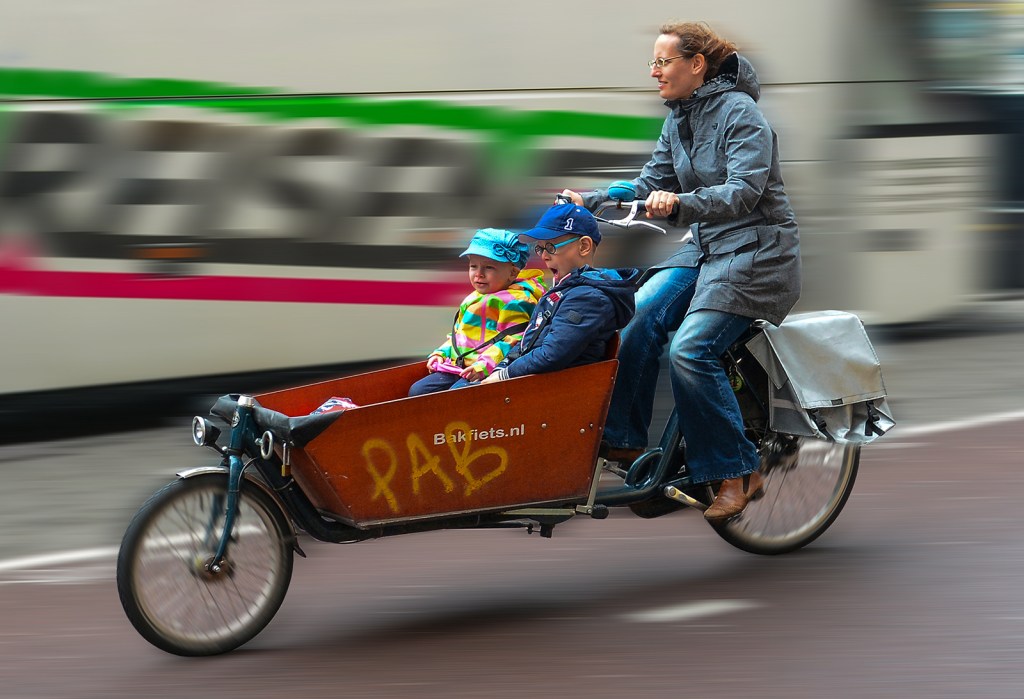
Malcolm Roberts is just at the top of the table with 106 points, but there are 4 challengers with 105. Don’t forget to send your 3 JPEG entries for the final part of this competition (on the theme of ”Cyclists”) to Derek Muller to collate. It looks like round 3 will an exciting decider.

This Thursday we will be hosting Mölnlycke Fotoclubb, who will be joining us from Gothenburg, Sweden for our annual interclub meeting, where we will view their images on the theme of “Time” and present a selection of MCC images. Perhaps next year we might agree on the theme and see what different interpretations arise? A Zoom link will be circulated soon.

10 October 2024 (Indoor Photoshoot)

This year’s indoor photoshoot was based on an idea by Derek Muller, inspired by a video on toy photography:

John, Steven, Jennifer, Joe and Liz brought in examples of their home studio setups, while members were asked to bring in small toys, vases, flowers, mirrors, rocks, shells, glass decorations, and other interesting things to photograph.

  • John West brought in his photo studio tent and his collection of paperclip figures. He also showed us examples of how he sets up his studio at home with LED lights and a curved piece of card to make an infinity curve.
  • Steven Beard brought in his small portable light box, which has built in LED lamps and a selection of coloured backgrounds, a dimmable LED torch and a glass globe. He also brought a selection of close-up lenses, which can be used as an alternative to a macro lens. In particular, the budget lenses can distort the edges of the frame and mimic the effect of the lenses shown in the “toy photography” video.
  • Jennifer Davidson brought a lined box with backdrops, torches and lights, together with a large selection of flowers and objet d’art.
  • Joe brought in some objects which cast shadows and showed how the plain white wall of the room could be used a backdrop to create some stark-looking images. Steven’s torch turned out to be useful for casting the shadows.
  • Liz Sowler showed how you can make a simple, home-made light tent out of a laundry drier covered with a sheet. Objects placed inside the tent could be lit with torches shining through the entrance. Liz had brought a glass eagle which we discovered looked best when lit just by the ambient light.

All in all, it was a very enjoyable evening. I hope our members have had the opportunity to learn from the different setups and take home a good selection of still life images.

  • Next week we have our first competition of the year. David Ferguson will be visiting us to judge our Digital Projected Images competition.
  • Next week is also the hand-in date for entries to the colour print competition. Please bring in 3 mounted prints and give them to George. Don’t forget to send JPEG copies of your 3 images to George as well.

11 April 2024 (International ZOOM Speakers)

On 11th April we were delighted to have 3 international speakers who joined us from Sweden and the Netherlands.

First up was Denise van der Boom who provided a bird’s eye view using drones to capture images from the sky. Denise has a very practical reason for favouring drone photography due to mobility issues. The drones do provide a great tool for getting compositions and locations that just would not work on foot. Members might recall Eddie Telford telling us back in February than he often waded into a river to get best shots. Denise gets similar shots without getting wet by hovering her drone over the water. The legalities of drone flight were mentioned (similar to UK rules) along with a brief comparison of a few different models. The small size and low weight of the DJI mini 4 meant that it could be taken on holidays as well as providing that unusual bird’s eye view of her homeland. While the novelty of the different views afforded by drones is interesting, there is still the need for a good composition. Abstract images of tulip fields full of coloured strips of flowers to the astonishing aqueduct that confused the senses, rainbows in agricultural watering systems and fine historic buildings all benefitted from the unusual viewpoint. Denise’s work can be seen at https://www.flickr.com/photos/denisevanderboom/

Hans van der Boom followed with a great 10 tips for “Photographing flowers in soft focus” using his own shots to illustrate his points (some of which may be found at https://www.flickr.com/photos/hansvanderboom/).

  • Use a Macro lens or adapters
  • Accessorise – mat to lie on, lights, plamps, clothes pegs, crinkled tin foil and, surprisingly, dog poo bags – the packs with various colours!
  • Use a BIG aperture, you don’t want all of the detail of a pin sharp image.
  • Make use of “out of focus” areas, to simplify your image.
  • Know your subject – go out with certain “in season” flowers in mind. An online Flowering Calendar could give an idea about what flowers might be currently available.
  • Pay attention to composition and space within the image. Using a low viewpoint (using a bean bag, or even a polystyrene bean bag for weight reduction) can keep the image simpler. The space around the subject is out of focus and this minimises clutter. Less is more!
  • Use of Light, avoiding harsh light and dark shadows. The use of a white umbrella can be used to diffuse light
  • Experiment – Christmas lights (battery operated LEDs) in front of or behind the subject. Use crinkled aluminium foil or glitter boards. Use a plant mister for a few dew drops. Place anything in the out of focus areas to simplify them. Reflectors can also be useful.
  • Bokeh and light bubbles are easier to achieve when shooting low to high.
  • Post Processing – add a little brightness and saturation, combine techniques. Moderation makes the master.

Hans also suggested shooting in raw and keeping ISO low to minimise digital noise. He also suggested that double or multiple exposure could be useful. Attaching the coloured dog poo bags, or sandwich bags etc to the lens hood with a clothes peg is a good way to fill the out of focus areas. Hans suggested that folks should look at the work of Bob Daalder for some inspiration.
https://www.instagram.com/bobdaalder/
https://4tinyhands.com/macro-photography-with-bob-daalder/

The evening was brought to a close by Helen Lunden, who many know from her time in Scotland and who is now a member of Mölnlycke Fotoklubb, Gothenburg, Sweden. Helen presented her work on images produced using Intentional Camera Movement (ICM). This was sparked by her attendance at a course in Dumfries and Galloway run by Morag Paterson and Ted Leeming. Helen covered the Why and How of ICM along with what equipment was needed along with examples and inspiration. The equipment used does not have to be special, in fact because the finished result is rarely pin sharp, older or less sophisticated kit can work out fine. Helen often uses an older Olympus EM10 and a mixture of lenses and ND filters.

How? Move the camera during the (long) exposure. An exposure of 1/8th of a second is often enough, and Neutral Density filters can help here. The camera is moved horizontally, vertically, spun, etc. You won’t know what you will get until the photo is taken. Multiple exposure can add to the finished result with perhaps multiple ICM images or 1 ICM image and a sharp image combined. Helen prefers to achieve the result in-camera with only subtle increase in contrast and saturation carried out afterwards. Her method is to “take lots of shots and delete what you don’t like”. While vertical movements are often used for trees and horizontal for landscapes, you can always add in other movements or shapes. An advantage of the technique is that it can work indoors or out, in pretty much any lighting conditions and even macro can be effective. People photos can provide a ghostly effect.

Helen’s recent projects include The Swedish West Coast (ghostly images), Dark & Light (quite moody) and Light & Harmony (quite fresh). It is very interesting to see things in the final images that have been introduced by the working method, the results can be striking. Helen was keen to encourage more photographers to have a go at ICM to see what they could produce. Helen Lunden’s images are on show at…
https://helunhelun7.wixsite.com/helensfoto
and she talked about the work of several other photographers who champion ICM images including…

along with the ICM PhotoMag Network run by

The ICM PhotoMag can be found on Facebook: https://www.facebook.com/ICMPhotoMag/

An interesting international evening highlighting aspects of photography that are not often discussed at Fisherrow.

  • This Thursday (18th April 2024) we will be having a “Studio Lighting Fun Workshop” at the Fisherrow Centre at our usual time of 7pm. Bring your camera or phone and come along to experiment and have fun.

14 March 2024 (Charles Everitt: Project Driven Photography)

This week we were delighted to welcome Charles Everitt back to the Musselburgh. Charles gave us a talk 2 years ago featuring photographs from his book “Water of Leith: Nature’s Course”. This year he returned to tell us how project-driven photography had restored his motivation in photography. When Charles began photography 30 years ago he toured popular sites around Scotland and came home with a selection of reasonable good photos showing the same subjects captured by everyone else. But then he decided to try some long exposure shots of the Water of Leith, right in his backyard, and realised the beautiful shot of a rapid he created could have come from anywhere in Scotland. He decided to start a project to tell the story of this hidden gem of a river running right through Edinburgh. He realised that by spending time getting to know one subject you can spot the ever-changing details that are easily missed by other photographers: the pattern of light on the water; the small flowers at your feet; and the changing colour in the reflections as the evening progresses, the sun sets and people switch on lights and close coloured curtains. The result was “Water of Leith: A Nature’s Course” mentioned earlier. The result inspired more projects, such as “Forthshore: East Lothian’s Coastline”, “Mull: Moments and Memories”, and his latest work, “Off Course: Nature Around A Golf Green”. Charles explained that the photographs he creates could be used to create a book, a calendar, a portfolio of prints, a magazine article or a presentation.

Charles now works as a part-time ranger on the Dundas Castle Estate, which gives him a plenty of opportunities to photograph the woodland throughout the year. He likes to create abstract photos from the shapes and textures around him, including some imaginative shots made using Intentional Camera Movement. When an old tree needed to be cut down, Charles took the opportunity to photograph the textures and shapes in the wooden disks before they faded. Charles played us a selection of audio visual presentations created from his project photographs. The first presentation showed us the Water of Leith as it flowed through Dean Village and included some beautiful “leaf, stone and water” compositions. Further presentations explored Charles’ macro images of flowers and fungi. Charles explained that he takes his flower shots from ground level at f/4 with his camera perched on a kneeling pad, and he uses a torch (not a flash) to light up the flower against its natural background. Sometimes he uses two torches: one to light the foreground and another to back-light the subject. He will sometimes shine a light through a coloured leaf to produce a natural colour but never uses coloured filters. Charles also showed us some of the red kite photos he had taken at Argaty Red Kites and some shots he had taken on trips to Bass Rock and Inchkeith Island (including some abstract shots of the water he took during the boat trips). Charles finished with a presentation showing how low-key shots of the Gormley statue on the Water of Leith can, when taken from the right angle, make it looks like a sinister figure rising from the depths.

Thank you Charles for another fascinating and enlightening presentation. I am sure we will all be trying your idea of using a torch to light our flower photographs, although it will be too late for next week’s set subject competition. Please note we have TWO meetings coming up in the next week:

  • On Tuesday, 19th March 2024 at 7:30pm we will be meeting Haddington Camera Club at Poldrate Mill, Haddington for the annual 3-way competition.
  • On Thursday, 21st March 2024 at 7:00pm we will meet as usual at the Fisherrow Centre in Musselburgh for our final set subject competition (Flowers), judged by Gordon Davidson.

29 February 2024 (Set Subject Competition B – Contrasting Textures)

Part two of our three-part set subject competition took place this week. Members were challenged to find some memorable images on the theme of “Contrasting Textures”. The competition was judged by Malcolm Roberts, the winner of last year’s competition. Malcolm began by saying how he had enjoyed seeing all the different interpretations of this year’s theme. He had looked at the impact, lighting, sharpness and depth of field of each image and rewarded images that had an emotional impact or showed some thinking outside the box. Malcolm commented that some images were a little soft, and he recommended sharpening them to show off the texture. He didn’t mind images that contained both sharp and soft parts when that highlighted the difference between the textures.

15 members had entered 45 images, covering a huge range of subjects. Some images showed contrasts within natural subjects, such as between the parts of a flower, between sand and grass, fungi and log or duck and water. There were man-made contrasts involving stone, rust, whitewash, rope, wood and metal. John West’s entry called “Two plumbing systems” combined both natural and man-made and showed a tree mirroring the bends and twists of a downpipe. Some members had responded to the “contrasting textures” challenge with some truly innovative or humorous entries. Carol Edmond’s “War Time Textures” showed a collection of wartime memorabilia and Jim Innes’ “Chalk and Cheese in Blue” showed some blue snooker chalk next to some cheese. Derek Muller had cleverly combined “JUST Cotton, Stone and Paper” to make a convincing artificial landscape with fluffy cotton-wool clouds, and Liz Sowler had crafted some humorous still life images out of household objects.
The top scorers were (in reverse order):

  • 5th place (49 points)
    • Derek Muller
    • Ed Robertson
  • 4th place (50 points)
    • Jim Innes
  • 3rd place (51 points)
    • Jennifer Davidson
    • Steven Beard
    • George Todd
  • 2nd place (52 points)
    • Joe Fowler
    • Liz Sowler
  • 1st place (54 points)
    • Elaine Gilroy
    • Carol Edmond

The top images were:

  • Poppy (Elaine Gilroy) – 20 points
  • Autumn Textures (Carol Edmond) – 19 points
  • Mandarin Duck (Joe Fowler) – 18 points
  • Bud and Petals (Steven Beard) – 18 points
  • Ice & Black Sand (George Todd) – 18 points
  • Anemone (Elaine Gilroy) – 18 points
  • War Time Textures (Carol Edmond) – 18 points
  • Housework (Liz Sowler) – 18 points
  • Fruit and Veg (Liz Sowler) – 18 points

We done to Elaine and Carol who both earn the right to judge next year’s competition. And thank you to everyone for your creative and entertaining entries. After two competitions, the “league table” now looks like this:

Elaine Gilroy (51 + 54 = 105)
Jennifer Davidson (53 + 51= 104)
Malcolm Roberts (52 + — = ??)
Carol Edmond (49 + 64 = 103)
Joe Fowler (50 + 52 = 102)
George Todd (— + 51 = ??)
Gordon Davidson (54 + 47 = 101)
Steven Beard (49 + 51 = 100)
Jim Innes (50 + 50 = 100)
Derek Muller (51 + 49 = 100)
John West (50 + 48 = 98)

Elaine’s win has taken her to the top of the table, but with only 4 points separating the top half of this table there is still everything to play for. Don’t forget to send your 3 JPEG entries for the final part of this competition (“Flowers”) to George Todd.

This Thursday we will be hosting Mölnlycke Fotoclubb, who will be joining us from Gothenburg, Sweden for our annual interclub meeting.

30 March 2023 (Joint Evening With Musselburgh Art Club)

This week we were delighted to welcome back Musselburgh Art Club for our annual joint meeting. One of the art club members had brought along a photographic print of an Alpine mountain landscape, which Joe Fowler was happy to critique. Joe went on to show a selection of prints created by club members. There were some beautiful landscape images taken from around the world and some portraits of interesting people. Joe explained how he would often make a picture from several components placed on top of each other using layers in Photoshop. Sometimes you would capture a great portrait of someone against the wrong background, and he would replace this background to improve the composition. Joe also showed a few of the club’s abstract prints, which showed how photographers can be creative and turn almost anything (even spoons and wrapping paper) into an interesting image.

The art club showed us a selection of their paintings. There were some lovely portraits, still life and landscape paintings. Some of the landscapes in those paintings were familiar to camera club members, having been painted from photographs taken from popular viewing points. Light, colour and composition are just as important in a painting as in a photograph. There were some paintings that made a bold statement by using a restricted pallet of colours. At one point, what looked from a distance like a painting of a mountain scene turned out to have been created from hundreds of shreds of torn paper. There was a discussion about how paintings are mounted. Oil paintings tend to be displayed unmounted unless they need to be displayed behind glass, in which case a mount helps to separate the painting from the glass. Other paintings can be displayed with a complementary mount board.

During the break we had time to chat over tea and cakes and look more closely at the works presented. Thank you to the art club for entertaining us once again, and to our caretaker for helping us at the end.

  • Doug Bernt tells me that the 159th Edinburgh International Exhibition of Photography is open for entry and will be accepting prints until 5th June 2023. He says: “Fees are reduced this year – 10% discount for coordinated entries of 10 people or more. Entrants are admitted free (normally £5) to the exhibition and can pick up a copy of the printed catalogue. As you are close, entries could also be dropped off with me or at EPS to save sending them in. The RPS Visual Art Group Members Exhibition and the RPS Scotland Members Exhibition will also be on display with the International.
    See the exhibition web site for more details: https://www.edinburghphotosalon.com/
  • Member Derek Muller will be riding on 21st of May 2023 to raise funds and awareness for prostate cancer in the Distinguished Gentleman’s Ride. Click the following link if you would like to sponsor him: https://www.gentlemansride.com/rider/DerekMuller448548
  • Next week we have our digital knock out competition on the theme of “Black & White”. Please bring along 3 JPEG images on that theme. We will show the images and vote for our favourites on the night.

See you on Thursday.

31 March 2022 (Joint Evening With Musselburgh Art Club)

This week it was a delight to revive our relationship with Musselburgh Art Club and restart our joint meetings after a 3 year hiatus. Our last joint meeting had been on 28th March 2019. We met in the larger room (G6) at the Fisherrow Centre, with some Musselburgh members joining by Zoom.

The evening began with a presentation from Joe Fowler, who showed a selection of our recent prints. Most of the prints were landscapes, showing how photographers use lighting and composition to set the mood. Joe invited art club members to guess where the photographs had been taken. Joe also showed how photographers could use post-processing to change a scene. A mountain landscape image had been created by combining a wide angle image of the mountains with a telephoto image of some buildings. This gave the buildings a more comparable size and helped balance the scene. The art club were surprised by this technique, since they usually painted scenes from life, but were interested in trying it themselves. Joe also showed harbour scenes, some still life images, and John West’s self-portrait of an artist at work.

The art club showed us a selection of their paintings. There was a discussion of the relative merits of different paint media. Most of the paintings had been made using acrylic paint, which could be built up in layers and modified as needed, but there were also some beautiful watercolours. We learned that watercolour is an unforgiving medium which is difficult to modify once painted, so it was a bold choice. There were some very impressive works by beginners. There was an interesting discussion about how cropping is judged differently for photographic works and paintings. Photographic judges tend to be more critical of parts of objects being cropped out (especially if the cropping looks accidental).

It was great to be able to meet and chat with art club members again after such a long wait. We finished the evening with some tea and biscuits and a closer view of the works presented. We were limited by the early closing time at Fisherrow, but a big “thank you” to our janitor for his help and understanding at the end.