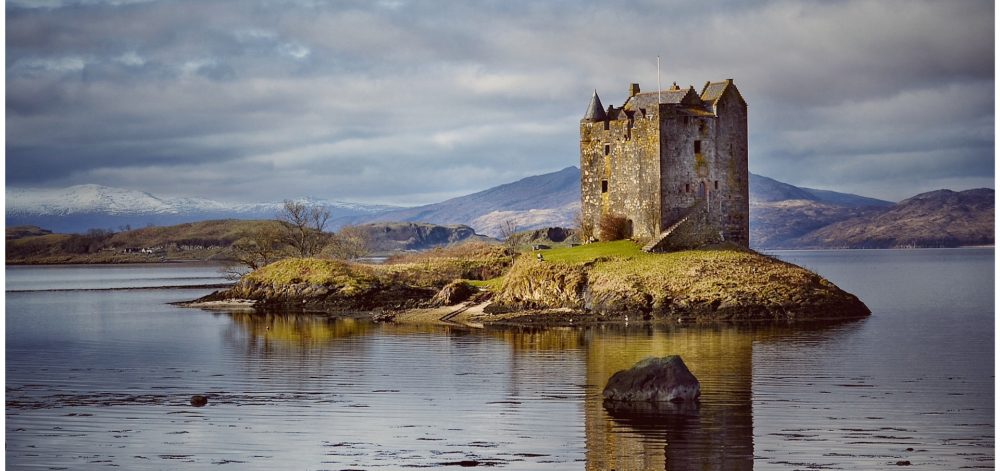
16 March 2023 (Human Portrait Print Competition)

Neil Spowart visited Musselburgh Camera Club this week to judge our human portrait print competition, our last formal competition of the season. Sadly, I missed this competition because of car problems, so apologies for not being there.

This was a smaller competition than usual, with just 22 prints entered by 8 members. The top scorers were (in reverse order):

  • 4th place (47 points)
    • Jim Innes
    • Derek Muller
  • 3rd place (48 points)
    • Mike Clark
  • 2nd place (49 points)
    • George Todd
    • John West
  • 1st place (51 points)
    • Joe Fowler
    • Carol Edmund

The top images were:

  • Milla (Joe Fowler) – 18 points
  • Katrine (John West) – 18 points
  • Pensive (Carol Edmund) – 18 points
  • Grandad (Carol Edmund) – 18 points

Well done to the joint winners, Joe and Carol. It looks like it was a tight competition, with just 1 mark separating 2nd, 3rd and 4th. Thank you to everyone who entered and thank you to Neil Spowart for judging the competition for us.

  • On Thursday 23rd March we’ll have a special “set of six” night which includes a poster competition. If you have any images that would work on a club poster, or have any ideas for poster design, please bring them along (or send them to George Todd) and we’ll choose our favourite.
  • George Todd is collecting club trophies for engraving. Please bring them along.

My car isn’t being serviced this Thursday so there’s a fair chance I’ll make it next time. See you there.

09 March 2023 (Swedish Interclub)

This week we were delighted to be joined once again by members from Mölnlycke Fotoclubb, in Gothenburg, Sweden for our annual interclub meeting. The meeting was hosted at the Fisherrow Centre and Mölnlycke Fotoclubb members joined us by Zoom.

The evening began with Musselburgh members reviewing the 15 images submitted by Mölnlycke Fotoclubb. The images once again demonstrated the creativity of our Swedish counterparts at Mölnlycke Fotoclubb. Members commented on the images and each then voted for their top 4 favourites. The most popular images were:

  • 1st place (13 votes)
    • A joyful and unusual portrait of a woman splashing in the water. Unusual because the water droplets were captured in perfect focus, with the woman blurring into the background. The technique made the image very eye-catching, like a health spa advertisement. We felt the moment had been captured perfectly.
  • 2nd place (11 votes)
    • An unusual and beautiful image of a cormorant captured in silhouette against a golden sunset sky. The photographer had enhanced the image by adding a texture, which we learned had been done using an in-camera ICM technique. A very impressive image.
  • 3rd place (9 votes)
    • A lovely wedding portrait, showing the bride as a side-on portrait framed by a bokeh of sparkly lights in the background.
  • 4th place (8 votes)
    • A really unusual abstract in muted colours, showing an intriguing array of similar shapes leading the eye through the frame. We learned the image was an ICM made while photographing a group of ducks.
  • 5th place (5 votes)
    • A close-up shot of the edge of some melting ice. We liked the subtle shades of colour, and the fact that the ice resembled the Mediterranean coastline.

Mölnlycke Fotoclubb members then commented on our 16 images. Their members had chosen several favourites, but there was only one clear winner:

  • Favourites:
    • Autumn Reflections (Elaine Gilroy)
    • Forest Huntress (George Todd)
    • Glen Coe Water (Mike Clark).
    • Kingfisher on the Rocks (Malcolm Roberts)
    • Lovely Cup of Tea (Joe Fowler)
    • Nuthatch (Gavin Marshall)
    • Sunset in Arisaig looking towards Eigg & Rhum (Gordon Davidson)
  • The Winner!
    • The Rescue (John West)

Well done to John West, whose creative image of a rescue made with paperclip figures (in Swedish blue and yellow) was declared to be our winner on the night.

  • This coming Thursday we have the results of the Human Portrait print competition, judged by Neil Spowart. Since this is a print competition I recommend that members come to Fisherrow to view it in person, rather than connecting by Zoom.
  • We are approaching the end of the season, and George Todd will be collecting trophies so he can have them engraved ready for the AGM and trophy presentation on 27th April. If you were lucky enough to win a trophy last year, please bring it along to Fisherrow.

02 February 2023 (Set Subject Competition C – Landscape)

Our set subject competition concluded on Thursday with the third and final part, on the theme of “Landscape”. George Todd had won last year’s competition and judged our entries. George mentioned that he liked landscape images to contain three balanced parts: something interesting in the foreground to lead in your eye; something in the middle distance; and something in the far distance to give depth to the image. He also mentioned that landscape images containing bodies of water work better when there is a landscape in the distance (with the water ending in a distance island or distant mountains, for example).

14 members had entered 42 images altogether. Most of the images showed scenes from Scotland, although there were a few from as far afield as England, Ireland, Iceland and Arizona. George found that some scenes were spoiled by the inclusion of people and houses in the far distance which didn’t add anything or act as focal points. George also pointed out how one image was spoiled by a large number of footprints in the foreground sand. He recommended photographing sandy scenes early in the day before other tourists have arrived to spoil the pristine surface. He also explained how landscape images could be made more punchy and colourful using a “levels” adjustment in Photoshop. Images that were a little too hazy and flat in the distance and could be improved with the Photoshop “de-haze” filter. Overall, George was impressed with the quality of the entries, especially from new members Ross Robertson, Jim Innes and Derek Muller, and there were a lot of high marks. The top scorers were (in reverse order):

  • 5th place (50 points)
    • Malcolm Roberts
  • 4th place (51 points)
    • Steven Beard
    • Steve Williams
    • Elaine Gilroy
    • Jim Innes
  • 3rd place (52 points)
    • Mike Clark
    • Derek Muller
  • 2nd place (53 points)
    • Joe Fowler
    • Ross Robertson
  • 1st place (54 points)
    • Gordon Davidson

The top images were:

  • Sunset in Arisaig looking towards Eigg and Rhum (Gordon Davidson) – 20 points
  • Wild Ponies (Joe Fowler) – 19 points
  • On the Trail (Steven Beard) – 19 points
  • Glen Coe Water (Mike Clark) – 19 points
  • Sky High (Ross Robertson) – 19 points
  • Icy Fjord (Steve Williams) – 18 points
  • Autumn Reflections (Elaine Gilroy) – 18 points
  • Natural Light Show over Urquhart Castle (Derek Muller) – 18 points
  • The Desert Guardians ensure the sun is extinguished after another burning day (Derek Muller) – 18 points

Well done to Gordon Davidson, who had the top image, achieved the highest mark, and has won the right to judge next year’s competition if he so wishes. Also well done to Derek Muller for submitting the most imaginative and amusing titles! The scoring was very close and, now that George has consulted his final spreadsheet, I can reveal that the final result from all three competitions is:

  • 1st place
    • Joe Fowler (54 + 53 = 107)
    • Malcolm Roberts (57 + 50 = 107)
  • 2nd place
    • Mike Clark (52 + 52 = 104)
  • 3rd place
    • Steven Beard (52 + 51 = 103)
    • George Todd (55 + 48 = 103)
    • Derek Muller (51 + 52 = 103)
    • Gordon Davidson (49 + 54 = 103)
  • 4th place
    • Steve Williams (51 + 51 = 102)
  • 5th place
    • Carol Edmund (50 + 49 = 99)
  • 6th place
    • John West (49 + 49= 98)

Well done to Joe and Malcolm for jointly winning the trophy! The scoring was so close this year that there are a lot of medal winners. Well done to you all.

  • Since we are coming up to the last few competitions of the season, it is time to start returning your trophies from last year to George so he can engrave them ready for the AGM.
  • This coming Thursday, 9th March 2023, we will be hosting our annual meeting with Mölnlycke Fotoklubb from Gothenburg. The meeting will be held by Zoom, but we will also show the meeting at Fisherrow. Come along a comment on Mölnlycke’s images and vote for your favourites.

23 February 2023 (3-Way Inter-club Competition)

This week Musselburgh Camera Club welcomed Beeslack Penicuik Camera Club and Haddington Camera Club to the Fisherrow Centre in Musselburgh for our first face to face 3-way interclub competition for 3 years. The previous two competitions had been held by Zoom only.

The meeting was broadcast on Zoom for members who couldn’t make it.  Those who could attend in person were treated to tea, biscuits and cakes, thanks to catering by Jennifer Davidson, Liz Sowler and John West.

The competition was judged by Stephen Lipton who had judged our black and white print competition a few weeks earlier.  Stephen once again entertained us with his stories and invited us to comment on his assessment of each image displayed.  Each club submitted 15 images each, making a total of 45 images.  The competition began with the 3 clubs neck-and neck. After the first 12 images, Beeslack and Haddington had 68 points and Musselburgh had 67 points. When we reached the half way point, Musselburgh were starting to edge ahead on 136 points to Beeslack’s 130 and Haddington’s 131. The trend continued, and when Musselburgh secured the top image of the night with George Todd’s “Durbar Monk” there was no going back. The final scores were:

  • First place (257 points) Musselburgh Camera Club
  • Second place (244 points) Haddington Camera Club
  • Third place (241 points) Beeslack Penicuik Camera Club

The top images of the night were spread amongst the three clubs:

  • Durbar Monk (Musselburgh Camera Club) – 20 points
  • Centre of Heart Nebula in Constellation Cassiopeia (Haddington Camera Club) – 19 points
  • More Than Breezy (Beeslack Penicuik Camera Club) – 19 points

The top Musselburgh images were:

  • Durbar Monk  – 20 points
  • Mountain Hare in the Snow – 18 points
  • Owl In Flight  – 18 points
  • Lovely Cup of Tea – 18 points

It was a delight to be able to entertain Beeslack and Haddington face to face again. Thank you to Stephen Lipton for judging the competition and for timing his presentation to let us finish in time for an early tea break.  Well done to Musselburgh Camera club for a decisive win.

  • George Todd is collecting prints for the Human Portrait print competition this weekend. Please contact George if you are planning to enter and haven’t yet given him your prints.
  • George has his work cut out, as this Thursday, 2nd March, he will be judging our final set subject competition on “Landscape”. Come along on Thursday to see the conclusion to this competition.
  • I have been informed there is also a Wex Photographic Open Day taking place in Edinburgh at 10am-5pm on 2nd March.

See you on Thursday,

Steven

16 February 2023 (Alan Walker: Discovering Nature Photography – Japan and Beyond)

This week we joined Beeslack Penicuik Camera Club for a fascinating talk by Alan Walker of Keswick Photographic Society, who described his experience discovering nature photography around the world. This particular talk, Japan and Beyond, is part 4 of Alan and Julie Walker’s “Discovering Nature Photography” series. You can find Keswick’s summary of this talk at the following link:

Julie and Alan Walker “Discovering Nature Photography Part 4 – Japan and Beyond” October 30th

Alan began by showing us the photographs he had taken from a visit to Japan in February 2018. The trip began in the Japanese Alps, where macaque monkeys gather to warm themselves in the hot pools. The two main problems in photographing these monkeys are the large numbers of people who gather round them and the steam from the pools. Alan avoids these problems by getting in close and waiting for moments when the steam subsides. He uses a Canon 200-400mm zoom lens with a built-in 1.4x converter, which can take the lens to 560mm. Photos were typically taken at ISO 1600, f/5.6 and 1/1000th second. Next he showed us photographs of the iconic red-crowned cranes at the Akan-Mashu National Park. These cranes are black and white birds photographed against a white snow background, so are difficult to capture. Alan recommended an exposure compensation of about +2 stops to get the whites looking right. The birds can be darkened in post-production. The best images are taken by getting down low to capture the birds against an out of focus distant background. Alan also described his experience photographing Steller’s sea eagles in the Sea of Okhotsk, birds which make great silhouettes when captured in profile.

Next, we were treated to a collection of nature photographs captured at the Bosque del Apache National Wildlife Refuge in New Mexico, USA. Here Alan photographed snow geese and sandhill cranes in dim lighting. He experimented with photographing the flocks of birds at slow shutter speeds (e.g. 15th-60th second) while panning, which created images with movement. He also captured individual birds when taking off or landing. The birds look better when taking off, because they are looking up, but it is much harder to catch a bird doing this.

Alan moved on to show us photographs of mountain hares and red squirrels captured in the Cairngorms National Park in Scotland, and photographs of tawny owls and other birds captured from a hide in Otterbourne in Hampshire. Alan also showed us photographs of big cats captured in the Kalahari Desert in South Africa. He explained that the Kalahari is not a good place to visit for a safari if you want to see lots of animals, but if you are a photographer you go for the yellow grass and the lovely light. Alan finished by showing us images of polar bears captured in the arctic tundra around Churchill in Canada. This is a very bleak and cold place, and the polar bears are out to get you! Alan showed how polar bears are photographed safely from large viewing vehicles. In the question and answer session Alan gave some tips on keeping your camera operating in the extreme cold:

  • Keep your batteries warm at all times. Keep charged batteries in your pocket, not in your camera bag. Be aware that even the discharged batteries need to be kept warm, or they won’t charge properly.
  • Be aware of condensation when you return to a warm room after being out in the cold. If you need to take your batteries out do it before you come in. Opening the camera in a warm room when it is still cold could let condensation form inside.

All in all this was a fascinating talk from beginning to end. Thank you Alan for entertaining us with the talk and thank you to Beeslack Penicuik Camera Club for organising it.

Steven

02 February 2023 (Audio Visual Evening at Beeslack CC)

The week Musselburgh Camera Club members travelled to Beeslack High School in Penicuik to join members of Beeslack Penicuik Camera Club for an Audio Visual evening.

The evening began with a MCC presentation by Allan Cameron on the “Battle of Prestonpans“, describing how forces lead by Charles Edward Stuart had achieved victory over Johnnie Cope’s government forces at Prestonpans, and showing photographs captured at the battle re-enactment.

Beeslack then presented a historical narrative on the creation and expansion of Edinburgh’s New Town, using a combination of old and new maps and some fascinating archive photographs showing the construction of Edinburgh’s most iconic buildings and the construction of bridges (such as North Bridge and Regent Bridge) spanning difficult chasms that we don’t even notice today.

Musselburgh’s Mike Clark then presented a unique record into the sites and sounds of underwater photography, showing the incredible variety of wildlife living in Scotland’s coastal waters.

Beeslack’s second audio-visual was on the construction and demise of the Edinburgh to Peebles railway, using a clever combination of “before and after” photographs to show how the railway used to look and what is left now. Drone footage showed us how the railway route is still visible in the landscape.

The evening finished with a recording of the Edinburgh Hogmanay Fireworks made by Steven Beard from a vantage point on Blackford Hill to test out his new camera microphone.

  • This week George Todd is accepting entries for the third and final part of our set subject competition. Please send your 2 JPEGs on the theme of “Landscape” to George by Thursday.
  • Next week (9th February) we have our Digital Photo Feedback session. In this session we will include some demonstrations on how to make digital enhancements in Photoshop. So please bring along images that you think could be improved with a bit of tweaking. Joe Fowler will also use this evening to demonstrate how to use the mount cutter.

I have finally written up the presentation that John Glynn gave us a couple of weeks ago. Click the link below if you are interested. See you on Thursday.

19 January 2023 (John Glynn: How to See Creatively)

26 January 2023 (Set Subject Competition B – Wildlife)

The second part of our set subject competition took place this week, on the theme of “Wildlife”. Steven Beard had won last year’s competition and earned the right to be the judge this year. Steven began by warning members of the strict rules that usually go with wildife photography competitions. The usual definition of wildlife photography is “Photographs documenting various forms of wildlife in their natural habitat“. The creatures portrayed in the photographs should be wild (not domesticated or kept in a zoo) and the habitat should be shown as-is (no cloning, composites or physical alterations). Organisations running competitions, such as Wildlife Photographer of the Year, will usually have strict rules, and will ask you to submit copies of the RAW files that came straight out of your camera to prove you didn’t change anything. Despite the strict rules, there are techniques you can use to improve your images. Cropping and brightness and contrast adjustments are also usually allowed. Having said this, the audience were relieved to hear that Steven would not be taking the rules so strictly. The images would be judged on their impact, on the story they tell, on the connection they make with the viewer, and on their overall quality.

14 members had entered 42 images altogether. There was a wide range of subjects, ranging from birds and insects photographed in the garden to wild animals photographed overseas on safari. Good images were the ones taken roughly at eye level, so there was a connection with the viewer, and which showed a story, such as Elaine Gilroy’s image of a swan carrying her cygnets on her back. Good images were also focussed on the subject and had a sufficiently narrow depth of field to blur the background. Avoiding distractions is difficult if you can’t clone them away. Choosing your camera position can help (if that is possible). Some images had bright objects or bright stripes in the background which could be darkened by burning. There were some images with cloning artefacts, which would have disqualified them from most wildlife photography competitions (but would have been ok for nature photography, where the rules are less strict). It is worth looking over your images carefully at 100% to locate and remove artefacts before submitting them. Also check the corners for distractions. The very best images were the ones with impact when seen amongst the rest. The top scorers were (in reverse order):

  • 5th place (48 points)
    • George Todd
    • John West
  • 4th place (49 points)
    • Gavin Marshall
    • Mike Clark
    • Carol Edmund
  • 3rd place (51 points)
    • Steve Williams
    • Derek Muller
  • 2nd place (54 points)
    • Joe Fowler
  • 1st place (57 points)
    • Malcolm Roberts

The top images were:

  • Goldfinch Deep in Thought (Malcolm Roberts) – 20 points
  • Owl in Flight (Steve Williams) – 20 points
  • Snow Leopards (Joe Fowler) – 19 points
  • Robin (Malcolm Roberts) – 19 points
  • Meal Time (Joe Fowler) – 18 points
  • Blue Tit (Malcolm Roberts) – 18 points
  • Gatekeeper Butterfly (John West) – 18 points
  • Bees Around Honey (Carol Edmund) – 18 points
  • Fly By (Derek Muller) – 18 points

Malcolm Roberts’ score of just 3 points less than full marks earns him the right to judge next year’s competition. Well done Malcolm. The league table after two competitions looks like this:

Joe Fowler (— + 54 = ??)
Malcolm Roberts (49 + 57 = 106)
Steven Beard (52 + — = ??)
George Todd (55 + 48 = 103)
Mike Clark (52 + 49 = 101)
Steve Williams (48 + 51 = 99)
Carol Edmund (50 + 49 = 99)
Derek Muller (46 + 51 = 97)
John West (49 + 48 = 97)
Gavin Marshall (44 + 49 = 93)
Gordon Davidson (49 + 43 = 92)

Malcolm Roberts has jumped up the rankings and leapfrogged George Todd, who is still in a strong position. Joe Fowler and Steven Beard lurk as dark horses. But as this as a “best two out of three” competition there is still everything to play for. Entries for the final part of the competition on “Landscape” are due on 9th February 2023.

A reminder that next week we will be joining Beeslack Pencuik Camera club at Beeslack High School for our annual audio visual evening. Here is a map to help you get there:

https://goo.gl/maps/oEgsHmr3WGDankS58

12 January 2023 (Match An Image Competition)

I was delighted this week to welcome North Berwick Photographic Society back to Musselburgh for the long-missed “Match an Image” competition. This competition format is almost impossible to host by Zoom and couldn’t take place during the pandemic. Our last match was back in October 2019, when the competition was hosted by North Berwick. This time it was our turn to host the competition, and Jennifer, Liz and George Smith welcomed our guests with some delicious tea and cakes.

The competition was judged by Gordon Scott and followed the same rules as before. Each club in turn displays an image and the other club attempts to match it in some way. Points are awarded to the first image if it cannot be matched, or to the second image if the challenged club matches it. A bonus point is awarded to the club which has the better of the two images when they match.

Musselburgh began the competition with John West’s iconic “For Khandles” image. North Berwick were amused by the title but couldn’t match the image. A good start. However, they replied with a fantasy swirl image which we attempted to match with a close-up of some flamingo feathers and failed. We replied with the first of our many motorbike images. North Berwick managed to match it but we got the bonus point by having the better image. Then North Berwick took the lead when we attempted to flummox them with Joe Fowler’s “Scotland The Brave”: an image of a queue next to a row of portable toilets. They managed to match it with a picture of some colourful beach huts and get the bonus point! By the time we reached the interval, North Berwick were leading by 14 points to 13.

During the second half we discovered that North Berwick couldn’t match our motorbike, horse and wildlife images and we couldn’t match their fantasy abstract and night photography images. When they posted an image of a shark we thought we could match it with one of Mike Clark’s underwater images but, alas, the lack of a shark in Mike’s image meant there wasn’t a match. We also attempted to match one of their night scenes with an image of a little girl who happened to be in the same pose as the figure in their image, but it was judged not to be close enough. But then North Berwick lead with an image of a bird and we pounced on it with Malcolm Roberts’ “Kingfisher on the Rocks” image. The image was judged to be a match and the better of the two, which nudged us ahead. There were no more matches, and at the end of the competition Musselburgh won by 25 points to 24. A very close call.

Thank you to everyone whose images were included, and to North Berwick for coming along. It was a particularly fun evening, especially as it was an interclub competition where participants are allowed to heckle. It must be a difficult to judge all those matches in front of a critical audience, and I thank Gordon Scott for putting up with us. I look forward to a rematch at North Berwick next year.

Next week our next speaker, John Glynn, will show us how to think creatively. John says he will be bringing along a lot of interesting objects and prints to show us, so it sounds like this talk will be another occasion where you’ll get a lot more out of it by attending in person.

05 January 2023 (Set Subject Competition A – Castles)

We returned after the Christmas break to the first of our 3 set subject competitions: competition A on the subject of “Castles”.  The competition was judged by Joe Fowler, who had won the competition in 2022.  Joe explained that he judges photographs based on two factors: composition and light. Composition is important. Don’t just point a camera at a castle and press the shutter, walk around the castle and see how it looks from different angles. Can you avoid any distractions by using a different viewpoint? Lighting is equally important. How is the light shining on the castle, and which viewing angle would make the best use of the lighting? Choose your time of day carefully, as bright lighting can overexpose your sky, and dull lighting can make the sky boring (although some members had got around this by using sky replacement).  Joe recommended everyone be their own judge. Look at your work and imagine how you would describe it as a judge.

45 images had been entered by 15 members.  Joe commented on the composition and lighting of each image. There were some images where the prime subject (the castle) was too far away and not prominent enough. Some images could have been taken from a better angle, and Joe pointed out examples where the direction of view didn’t match the direction of the light, which created a “one dimensional” image with only half the castle properly lit. There were also some distractions, such as a modern ice cream van in front of Edinburgh castle or an ugly white gun in front of Eilean Donan castle. In some cases the sky replacement had created a conflict. If you add a new feature to an image make sure the light and shadows match, and if you add a new sky check that it matches the reflection in the water.  Joe also pointed out that many images had trees and bushes blocking the foreground and detracting from the view of the castle.  So, next time you photograph a castle you have a choice: either take some walking boots so you can walk around and find the best view, or take a chainsaw so you can remove any trees that block your view!

The scoring was very close, and the top scorers were (in reverse order):

  • 5th place (48 points)
    • Stephen Williams
    • Derek Muller
  • 4th place (49 points)
    • Malcolm Roberts
    • Gordon Davidson
    • John West
    • Jim Innes
  • 3rd place (50 points)
    • Carol Edmund
  • 2nd place (52 points)
    • Steven Beard
    • Mike Clark
  • 1st place (55 points)
    • George Todd

The top images were:

  • Through the Valley to Dunnotar Castle (George Todd) – 20 points
  • Tantallon Castle (Carol Edmund) – 20 points
  • Edinburgh Castle Lights (Mike Clark) – 19 points
  • Eilean Donan (Jim Innes) – 19 points
  • Dunottar Castle (Malcolm Roberts) – 18 points
  • Hailes Castle (Steven Beard) – 18 points
  • Sunset of Tantallon Castle (George Todd) – 18 points

Well done to George Todd, who wins the right to judge yet another competition next year.  This is the first of a 3-part competition, with the final result depending on the total score from the best 2 competitions; and with so many members getting good scores this still leaves the trophy open to anyone. The next part of the competition takes place in 3 weeks time, on 26th January 2023.

And on that subject, I have to point out a mistake in my previous message. This week is not the hand-in date for the human portrait print competition. It is the hand-in date for the next set subject competition. Please send your 3 JPEG images on the theme of “wildlife” to George Todd as soon as possible. (Human portrait prints are not needed until 23rd February 2023 – panic over).

Next week we are hosting the “Match an Image” competition, with North Berwick Photographic Society as our special guests. This competition is too complex to host by Zoom, so I hope as many members as possible will join us in room G6 at Fisherrow. The session starts at 7pm on Thursday, 12th January 2023.

08 December 2022 (Julian Elliot: Breathless in Nepal)

Our last meeting before Christmas was another joint Zoom talk hosted by Beeslack Penicuik Camera Club and joined by Earlston Camera Club members. Julian Elliot, an award-winning landscape and travel photographer, connected with us from France and gave us a fascinating talk about his experiences. You can find more about Julian on his web site:

https://www.julianelliottphotography.com/profile/

Julian began his talk by describing his kit and explaining his techniques. He normally travels with a Canon DSLR camera plus 6 lenses (3 zoom lenses and 3 tilt/shift lenses), although 90% of his travel photography is made with the following gear:

  • A 24-70 zoom lens. Julian finds this lens makes great portraits, and is also useful for landscapes and use in cramped spaces. He likes to photograph hands with this lens.
  • A 100-400 zoom lens. Julian uses this lens to make landscape images of distant mountain scenery. Some people are surprised that a telephoto lens can be used for landscapes, but mountains tend to look more impressive when the depth is compressed. The lens can also pick out interesting details from the landscape. Julian also uses this lens to make panoramas, and to take distant portraits with a compressed background.
  • A 24 tilt-shift lens. Julian finds a tilt-shift lens invaluable for photographing architecture. It gives superior results than taking a picture with a normal lens and using a lens correction filter because you can see the result you are going to get in-camera, and there is is no cropping of the image at the edges. Julian showed some examples of what could be done with this lens: a superb shot of the inside of a cathedral, or a photograph of a statue in front of a temple taken from only a few feet away with all the verticals vertical.
  • A 1.4x extender, which Julian uses to extend the capabilities of the above lenses/
  • A carbon fibre tripod (lightweight for travelling).
  • A polarizer filter and a neutral density filter. Polarizer filters can enhance the sky or remove reflections, and the neutral density filter allows longer exposures.
  • A decent camera bag. Julian explained that most bags are designed to be used in an airport, and it is hard to find a bag that is versatile enough to use on a flight and carry outside.

Julian went on to explain how he plans his travels. He learns about destinations by reading travel magazines and using travel guides for research. He looks at photographs published by other photographers to get an idea of the possibilities. You can follow particular photographers on social media, but you can also follow specific hashtags, such as “#vietnam”, to see all the posts made about a particular place. But he warned us that landscapes are constantly changing. What you see described in a guide or shown in a past photo might not be there any more, so be prepared for the unexpected. He uses the following tools to plan his shots:

  • Google street view can be used to explore a destination virtually, but not all countries allow it.
  • Once Julian has decided on a destination, he uses Google Mind Maps to plan his travel. It can be linked to maps, and the application can be used on a phone to create an itinerary.
  • The Photographer’s Ephemeris can be used to plan your shots and investigate where the light will come from at different times of the day. The PhotoPills application is also a very useful planning tool.

After taking us through the basics, Julian then took us on a journey to Upper Mustang in Nepal, showing us the spectacular landscape images he had take on the trip, the portraits of the people he had met on the way, and his architectural photographs of the towns and temples. Travelling to Upper Mustang was like travelling back in time, with very different norms and customs. He became friends with a local guide who introduced him to interesting people. Julian would often ask permission to take his shots from unusual vantage points, such as the roof of a temple. On his journey through Nepal, Julian needed to climb to some high altitude view points, and on one of these excursions he suffered from serious altitude sickness. Julian told us the story of his treatment and recovery and warned anyone else travelling to Nepal to be aware of the effects of the altitude and not to push themselves too quickly. Julian finished his presentation with a selection of portraits and images of more spectacular temples. It was a very entertaining and enlightening evening.

That was the last club meeting at Fisherrow until the New Year. Next week we will be meeting at the Ravelston House Hotel in Musselburgh for the club’s Christmas social evening.

Steven